

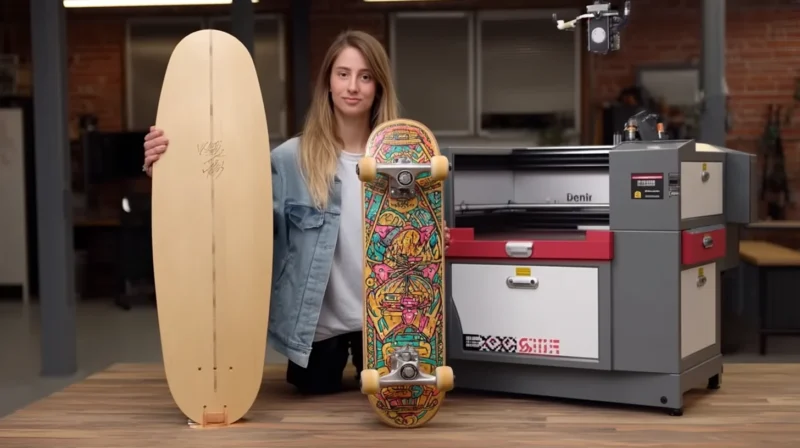
When graphic designers shop for a laser cutter or engraver, their first instinct is to compare specifications. Wattage, speed, bed size, and engraving depth all feel concrete and measurable. Specs provide a sense of control and certainty, making it easier to justify a decision on paper. They help narrow options and suggest what a machine should be capable of handling.
But once the machine arrives and real work begins, those numbers stop answering the most important questions. Designers don’t struggle because they chose the wrong wattage; they struggle because turning digital designs into clean, repeatable physical results is far more complex than a spec sheet suggests. At that point, post-sale support becomes the deciding factor determining whether the laser functions as a reliable production tool or turns into an expensive bottleneck.
Specs Help You Buy. Support Helps You Work.
Specifications are useful before a purchase. They help designers narrow options and confirm that a machine can technically handle certain materials or sizes. But production problems rarely originate from missing specs. They appear when design files meet real-world variables.
Common early issues include:
- Vector cuts that don’t align with exported artwork
- Text engraving that burns instead of producing clean contrast
- Acrylic edges melting or charring unexpectedly
- Inconsistent results between identical jobs
Industry data shows that a significant percentage of new laser owners experience production delays within their first 90 days. In most cases, the machine works as designed. What’s missing is guidance—a point frequently reinforced in Boss Laser reviews, where users emphasize the importance of clear setup help and ongoing support over hardware limitations.
Installation Is Where Productivity Is Won or Lost

Get 300+ Fonts for FREE
Enter your email to download our 100% free "Font Lover's Bundle". For commercial & personal use. No royalties. No fees. No attribution. 100% free to use anywhere.
Laser systems depend on proper electrical supply, grounding, ventilation, cooling, and alignment. Even small installation errors can cause performance issues that look like hardware failures. Designers unfamiliar with industrial equipment often assume poor output means poor quality. In reality, the machine may simply be misaligned or incorrectly configured.
This is where post-sale support plays a critical role. A knowledgeable technician can quickly identify whether a problem is mechanical, environmental, or procedural—and resolve it before wasted material and lost time pile up. In many documented user cases, machines that initially produced weak or uneven cuts were fully functional once alignment or focus was corrected. The specs didn’t change. The understanding did.
Training Turns Equipment into Capability
Lasers are skill-based tools. Material type, thickness, power, speed, focus height, air assist, and file structure all interact. For designers accustomed to digital workflows, these physical variables can be unintuitive. Trial-and-error learning is expensive. Scrap material, rework, and lost time add up quickly—especially in client-driven environments.
Effective training focuses on:
- Real materials, not generic samples
- Actual design files, not simplified demos
- Live adjustments with immediate feedback
This kind of learning accelerates understanding in ways manuals and videos can’t replicate. Research into shop productivity consistently shows that trained operators reach stable output faster than those who rely solely on self-teaching. The difference is visible in efficiency, confidence, and consistency.
Post-Sale Support Evolves with the Designer
Laser ownership is not static. Over time, new challenges naturally emerge as designers expand into different materials, adopt software updates that alter workflows, and take on more complex jobs. Components wear, maintenance becomes more critical, and small adjustments start to have a bigger impact on final results. While short-term support helps users get started, long-term support is what allows designers to adapt and continue improving as their needs evolve.
Without reliable guidance, many designers turn to forums or trial-and-error methods that often provide conflicting advice. This uncertainty leads to hesitation, inconsistent output, and unnecessary material waste. Industry estimates suggest that a meaningful portion of material loss in small shops comes from unresolved setup issues and incorrect parameter choices. Ongoing support reduces these losses by addressing problems early—before inefficient practices become ingrained habits.
Reviews Reveal What Matters After the Sale
Spec sheets describe what a machine is capable of, but reviews reveal what happens when things don’t go as planned. After purchase, users rarely dwell on raw power numbers. Instead, they focus on response time, clarity of explanations, and whether support remains engaged until an issue is fully resolved.
Patterns across user feedback show that buyers consistently value setup assistance, training access, and responsive support over small differences in specifications. This emphasis appears across manufacturers and reflects real production priorities. Reviews don’t reward promises; they reward outcomes.
What Happens When Support Is Weak
When support is limited or difficult to access, designers often compensate in unproductive ways. A common assumption is that higher wattage will fix cutting or engraving problems, but in most cases, it doesn’t. Incorrect settings on a more powerful machine simply lead to faster, more costly mistakes.
Without proper guidance, designers fall into endless experimentation without understanding why results vary. Time disappears, confidence drops, and deadlines tighten. Production stalls not because the equipment is incapable, but because critical guidance is missing at the moments it’s needed most.
What Graphic Designers Should Look for Beyond Specs
Before purchasing a laser, designers should ask questions that go beyond the spec sheet:
- Who assists with installation and initial setup?
- Is training included, and is it tailored to real materials?
- How long does support remain available?
- How quickly are questions answered?
- Is support handled by knowledgeable technicians or outsourced staff?
After purchase, early action matters:
- Schedule training immediately
- Test real production files, not samples
- Document settings that work
- Ask questions early, before problems compound
Delaying support often turns small issues into costly habits.
The Core Lesson Designers Learn Over Time
Specs impress on day one, but support proves its value over time. For graphic designers, consistent uptime matters more than raw numbers, and practical understanding matters more than long feature lists. Reliable guidance ultimately outweighs marketing language once real production begins.
A laser’s true value isn’t defined by its maximum power rating, but by how consistently it delivers clean results in real workflows. That’s a lesson many designers only learn after the machine is already on the floor and production is underway.