

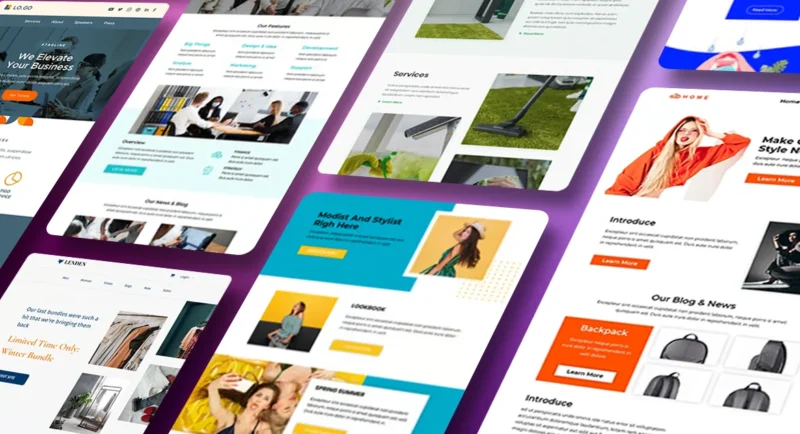
Email is a strange medium. It’s one of the oldest digital tools we have, yet it remains one of the most effective ways to talk to people . But because we use it every day, it’s easy to get complacent. We start treating our email lists like a collection of data points rather than a group of human beings who’ve invited us into their private digital space.
When you send an email, you’re essentially knocking on someone’s door. If you show up too often, or if you show up with a messy, cluttered presentation that’s hard to look at, they’ll eventually stop answering.
And that’s the thing about trust. It’s hard to earn and very easy to lose. Honestly, I’ve been on both sides of this.
Avoiding common mistakes isn’t just about increasing your open rates. It’s about respecting the relationship you’ve built with your subscribers through thoughtful, intentional design. Here are 5 tips for designing a high-converting email.
1. Focus on Visual Hierarchy
One of the biggest mistakes is sending an email that feels like a giant “wall of text.” When you send content that lacks a clear visual path, your audience can feel it. They see a jumble of words and images and wonder where they’re supposed to look first.
Every email should have a “why” that is supported by how it looks. Are you trying to educate your readers? Use bold headers to guide their eyes. Are you offering a solution? Use white space to let that message breathe.
But ask yourself: if you received this, would you actually be able to skim it in five seconds?

Get 300+ Fonts for FREE
Enter your email to download our 100% free "Font Lover's Bundle". For commercial & personal use. No royalties. No fees. No attribution. 100% free to use anywhere.
Before you even type the subject line, define the one thing you want the reader to see. If the design doesn’t lead them there, your reader certainly won’t find it on their own.
2. Don’t Neglect the Subject Line (The “Packaging”)
The subject line is the most important part of your email because it’s the gatekeeper. It is the first piece of design your audience interacts with. You could have the most beautifully crafted layout written inside, but if the subject line is boring or looks like spam, no one’s ever going to see it.
Many people make the mistake of being too vague or too “salesy.” So, avoid using all caps or excessive exclamation points. Instead, try to be helpful or intriguing. A good subject line promises value. It tells the reader that their time’s going to be well spent.
Think of it as a friendly greeting rather than a loud megaphone. And that’s the point. People want to hear from a friend, not a robot trying to win an award for most adjectives used.
3. Prioritize the Mobile Experience
We live on our phones. Most people check their emails while standing in line for coffee or sitting on the train. If your email isn’t optimized for mobile devices, you’re losing a massive portion of your audience because the design simply breaks.
If your images don’t load properly or your text is so small that it requires zooming in, people will simply delete the message. It’s often helpful to craft your content using a responsive HTML email template to ensure the layout shifts correctly across different screen sizes.
And let’s be honest, we’ve all deleted an email simply because the font was too tiny to read on a crowded bus. It’s frustrating. It feels like the person on the other end didn’t even check their own work.
Keep your layout simple. Use a single-column design and make sure your buttons are large enough to be tapped with a thumb. A seamless experience shows that you care about the user’s convenience.
4. Have a Clear Visual Call to Action
Sometimes we want our subscribers to do too many things at once. We use five different colors, three different fonts, and ask them to do four different tasks. This leads to decision paralysis.
When faced with a design that is too busy, most people choose to do nothing.
Focus on one primary call to action. Whether it’s a bold button or a simple, underlined link, make it obvious and easy to find. You can include secondary links, but the main goal should stand out visually. Give your readers a clear path to follow. I guess it’s about making things easy for them. We’re all tired and busy, right?
5. Live and Die by Data
Finally, many people fall into the trap of “set it and forget it.” They send emails week after week without ever looking at how the design is performing. But your data’s a goldmine of information about what your audience actually likes to look at.
Look at which layouts get the most engagement. Are your readers clicking on the big header images or the simple text links? Do they engage more with a minimalist look or something more vibrant? If you ignore these signals, you’re essentially talking to a room with your eyes closed.
And who wants to shout into the dark? It feels a bit lonely, actually.
Use the feedback your audience gives you through their actions to refine your design and provide more of what they find visually appealing.
Moving Forward
Email marketing is a practice of consistency and empathy. It’s about showing up in a way that adds value to someone’s day through clear, thoughtful communication. By avoiding these common errors, you move away from being a nuisance and toward being a trusted resource. It takes time to find your rhythm, but the effort’s worth it for the connection you build. I’m still learning this every day, too.