

In this article:
- The Historical Tension Between Design And Production
- How Transfer Production Supports Creative Freedom
- Prototyping Without Financial Pressure
- The Tactile Experience Of Design
- Distributed Creative Workflows
- Comparing Transfer Systems With Traditional Print Methods
- Scaling Creative Output Without Scaling Infrastructure
- Brand Identity And Production Integrity
- Digital Visibility And Creative Services
- The Future Of Creative Production Systems
- Conclusion
Design has evolved dramatically over the last decade. Digital tools have made it easier than ever to create visually complex, color-rich, detail-heavy artwork. But while creative possibilities have expanded, production systems have not always kept pace.
For designers, one of the most frustrating realities has been the gap between concept and execution. A design can look flawless on screen, yet production limitations—color restrictions, setup costs, minimum quantities—force compromises.
Modern transfer-based production systems are closing that gap.
Instead of asking designers to simplify artwork to fit traditional printing processes, newer models allow production to adapt to design.
The Historical Tension Between Design And Production
In traditional screen printing environments, complex designs increase setup time and cost. Each additional color requires new preparation. Fine gradients demand halftone conversions. Small production runs become economically inefficient.
This often leads to subtle creative compromises:
- Simplified color palettes
- Reduced detail
- Larger design blocks
- Avoidance of complex textures
For creative professionals, these constraints can limit brand expression.

Get 300+ Fonts for FREE
Enter your email to download our 100% free "Font Lover's Bundle". For commercial & personal use. No royalties. No fees. No attribution. 100% free to use anywhere.
Transfer-based production offers an alternative.
How Transfer Production Supports Creative Freedom
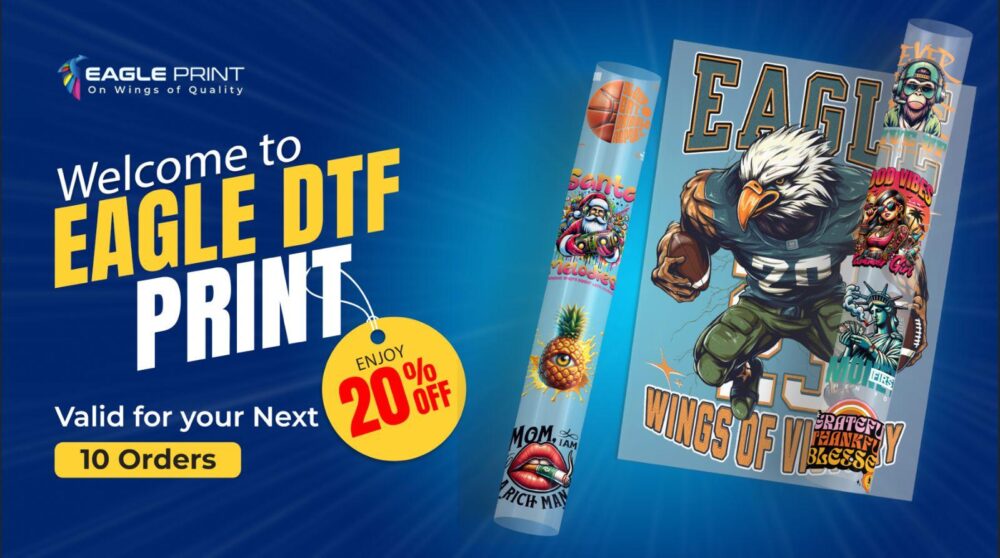
Direct-to-Film transfer systems allow high-resolution artwork to be printed onto specialized film with minimal technical constraint. Once produced, these transfers can be applied to various materials without reconfiguring equipment.
This flexibility provides several creative advantages:
- Unlimited color depth
- Detailed gradient preservation
- Intricate linework accuracy
- Multi-layer texture simulation
- Small-batch feasibility
For studios and creative brands sourcing Custom DTF transfers, production becomes an extension of the design process rather than a limitation.
Prototyping Without Financial Pressure
Modern design culture values experimentation. Brands test new visuals regularly. Independent creators iterate constantly.
Traditional setup-heavy systems penalize experimentation due to cost.
Transfer-based workflows allow designers to:
- Test limited concepts
- Release micro collections
- Adjust artwork quickly
- Validate demand before scaling
This reduces financial risk while supporting creative agility.
For teams working with reliable suppliers of Custom DTF transfers, production remains stable even when design cycles accelerate.
The Tactile Experience Of Design
Design is not purely visual—it is physical.
Texture, flexibility, and durability influence user perception just as much as color and layout. Transfer-based systems produce results that integrate smoothly into material surfaces while maintaining softness and movement.
Quality transfer production ensures:
- Long-term durability
- Resistance to cracking
- Consistent finish
- Comfortable feel
Execution quality directly affects brand credibility.
Distributed Creative Workflows
Creative teams today often operate remotely. Designers collaborate across cities or countries. Production must align with this distributed model.
Transfer production supports decentralization:
- Design created in one location
- Transfers manufactured centrally
- Application handled locally
- Fulfillment managed regionally
This modular workflow enhances flexibility without sacrificing consistency.
Studios relying on professionalCustom DTF transfers suppliers gain predictable output across distributed teams.
Comparing Transfer Systems With Traditional Print Methods
Screen Printing
Screen printing is efficient for large, uniform production runs but becomes restrictive for small-batch, multi-design operations.
Transfer production removes setup repetition and supports design variation.
Vinyl Cutting
Vinyl works for simple typography or logos but struggles with layered complexity and fine gradients.
Transfer-based systems handle intricate artwork without increasing stiffness.
Sublimation
Sublimation is limited by fabric compatibility. Transfer production offers broader material flexibility.
For design-driven brands, versatility is essential.
Scaling Creative Output Without Scaling Infrastructure
As creative brands grow, operational strain often follows. More orders usually mean more equipment, more staff, and more logistical complexity.
Transfer-based production allows scaling without proportionate infrastructure expansion.
Studios can:
- Increase order volume
- Expand product offerings
- Enter new markets
- Maintain consistent quality
without investing in additional heavy machinery.
This efficiency strengthens long-term sustainability.
Brand Identity And Production Integrity
Branding depends on consistency. If visual elements vary from batch to batch, brand equity weakens.
Professional transfer production maintains:
- Color calibration accuracy
- Consistent adhesive performance
- Predictable material behavior
- Reproducible results
This stability protects brand identity over time.
Digital Visibility And Creative Services
Creative businesses compete not only on design but also on discoverability.
Search queries around:
- Custom transfer production
- Professional transfer printing
- Design-ready transfer suppliers
reflect growing commercial demand.
Strong digital authority enhances credibility and strengthens positioning in competitive creative markets.
The Future Of Creative Production Systems
The creative industry is moving toward flexibility. Designers expect production systems that respond quickly and preserve artistic intent.
Transfer-based models align with:
- Rapid design cycles
- Modular production
- Distributed collaboration
- Lean operational strategy
Rather than forcing design to adapt to outdated systems, modern transfer production allows creativity to lead.
Conclusion
Creative excellence requires production alignment. When design freedom meets flexible execution, innovation accelerates.
By leveraging Custom DTF transfers, studios and independent brands can protect creative integrity while scaling efficiently.
Transfer-based production does not restrict design—it supports it.
In a world where brand differentiation depends on originality, production systems that empower creativity will define the next generation of design-driven businesses.