

In this article:
- From Manual Execution to Programmatic Control
- Maintaining Brand Integrity with ChatGPT Images 2.0 API
- Building Automated Production Pipelines
- The Shift from Executor to Architect
- Conclusion: Establishing a Modern Design Foundation
Modern design agencies are finding that the primary hurdle to growth isn’t a lack of creative ideas—it’s the sheer physics of production. When a single campaign requires hundreds of high-fidelity variations across different platforms, languages, and contexts, manual pixel-pushing quickly becomes an operational bottleneck that drains both time and talent.
To solve this, designers are turning to GPT Image 2 API to redefine their creative workflows. By shifting from a manual “one-off” mindset to a systemic approach powered by the GPT Image 2 API, agencies are building internal creative engines that treat design as a scalable logic rather than a repetitive task.
From Manual Execution to Programmatic Control
The primary distinction of theGPT Image 2 API is that it moves beyond the limitations of a standard web interface. While a browser-based tool is sufficient for individual assets, professional design teams require the granular control that only an API integration can provide.
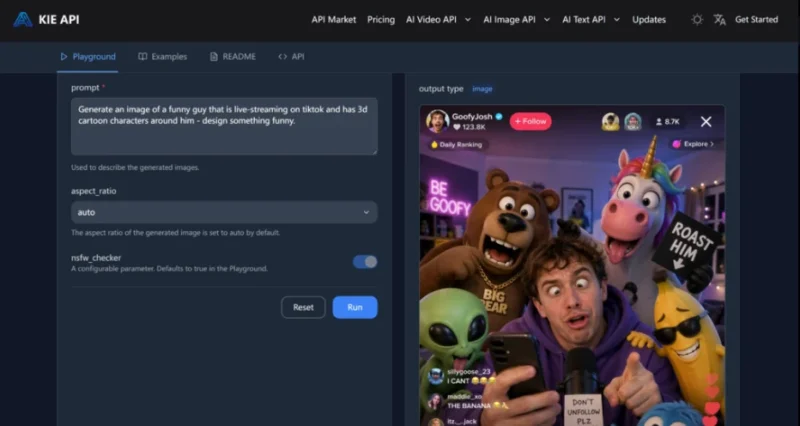
By integrating the GPT-Image-2 API directly into their internal infrastructure, developers can build proprietary interfaces that allow for batch processing and automated asset generation. This level of programmatic control enables teams to define strict parameters—such as aspect ratios, lighting profiles, and composition rules—ensuring that every output aligns with the brand’s core aesthetic before a human designer even opens the file.
Maintaining Brand Integrity with ChatGPT Images 2.0 API
One of the historical hurdles in programmatic imagery was the unpredictability of typography and spatial layout. For a professional agency, a “nearly correct” logo or slogan is a failure. The emergence of ChatGPT Images 2.0 via the GPT Image-2 API has addressed this engineering gap.
The API now demonstrates a profound understanding of typographic accuracy and complex layout instructions. Whether it is rendering crisp, legible slogans on a digital poster or adhering to specific grid systems defined in a prompt, the OpenAI GPT Image 2 APIensures that the visual output is not just a generic illustration, but a production-ready asset. This precision allows developers to automate the creation of social media kits and marketing banners while maintaining the absolute integrity of the brand’s visual identity.
Building Automated Production Pipelines
The true power of the GPT Image 2.0 API lies in its ability to function as a silent infrastructure. Creative teams can now build automated pipelines where a single data input—such as a product name or a campaign theme—triggers the simultaneous generation of a full suite of high-resolution assets.
Get 300+ Fonts for FREE
Enter your email to download our 100% free "Font Lover's Bundle". For commercial & personal use. No royalties. No fees. No attribution. 100% free to use anywhere.
By utilizing the ChatGPT Image API for these high-density rendering tasks, agencies can bypass the traditional “mockup-to-execution” delay. The assets produced are high-fidelity and crisp enough for professional use, reducing the time spent on manual upscaling or background cleanup. This allows the development team to focus on optimizing the delivery system, while the design team focuses on high-level creative strategy.
The Shift from Executor to Architect
As agencies adopt GPT Image 2 API solutions via platforms like kie.ai, the role of the designer is evolving. Teams are transitioning from being executors of pixels to being architects of visual identity systems. By mastering the logic of the API, designers can build “creative recipes” that produce consistent, high-impact results at any scale.
This strategic deployment of the ChatGPT Image API ensures that agencies remain agile in an increasingly competitive market. Instead of scaling by increasing headcount, they scale by increasing the efficiency of their technological stack.
Conclusion: Establishing a Modern Design Foundation
The future of design is not about replacing the designer, but about empowering the design team with professional-grade automation tools. By integrating theGPT-Image-2 API into their daily operational flow, agencies can finally balance the competing demands of creative excellence and high-volume delivery.
Explore the technical documentation and integration possibilities at GPT Image 2 API to begin building your agency’s own scalable creative engine.