


In this article:
- What Is Sustainable Graphic Design?
- Why Sustainability Is Becoming a Major Design Priority
- Expanding the Scope of Sustainability Beyond Packaging
- The Principles Behind Sustainable Graphic Design
- The Role of Typography in Sustainable Design
- How Sustainability Leads to Better Design
- Common Myths About Sustainable Design
- Practical Ways Designers Can Get Started
- The Future of Sustainable Graphic Design
Graphic design has always been about solving problems. We create visual systems that help brands communicate, products stand out and audiences engage with information.
Today, many designers are expanding that mission. In addition to creating effective and beautiful work, we are increasingly considering the environmental impact of our choices throughout the design process.
This shift has given rise to sustainable graphic design — a growing movement focused on reducing waste, conserving resources and designing with long-term impact in mind. What was once considered a niche concern is quickly becoming part of mainstream design practice.
As someone who has watched sustainability move from the margins to the center of industry conversations, I have noticed that the best designers are not treating it as a limitation. Instead, they are using it as another design challenge to solve creatively.
The result is often work that is more environmentally responsible, as well as more thoughtful, efficient and effective.
What Is Sustainable Graphic Design?
Sustainable graphic design is the practice of minimizing the environmental impact of design work throughout its life cycle. Rather than focusing solely on visual outcomes, designers consider how materials are sourced, how products are manufactured, how long they remain useful and what happens when they are no longer needed.
For print projects, this might involve selecting recycled paper stocks, reducing ink coverage or simplifying packaging structures. For digital projects, it can mean optimizing file sizes, improving website performance and reducing unnecessary data usage.

Get 300+ Fonts for FREE
Enter your email to download our 100% free "Font Lover's Bundle". For commercial & personal use. No royalties. No fees. No attribution. 100% free to use anywhere.
At its core, sustainable design encourages us to think beyond the final deliverable and consider the broader system within which our work exists.
Why Sustainability Is Becoming a Major Design Priority
Several trends are pushing sustainability higher on the agenda for designers and brands alike.
Consumer expectations have shifted significantly over the past decade. Research from McKinsey found that approximately two-thirds of consumers consider sustainable packaging at least somewhat important when making purchasing decisions, while about half are willing to pay more for products with environmentally friendly packaging.
Younger generations are particularly influential in driving this change. Brands increasingly recognize that sustainability is becoming a competitive advantage.
Consumers across generations — including Gen Z, Gen X and baby boomers — are increasingly willing to pay more for products with sustainable, eco-friendly packaging. Gen Z shows particularly strong environmental awareness and willingness to spend on responsibly designed options when value and quality are competitive.
This growing demand is a key driver behind the increased investment many companies are making in sustainable packaging strategies and environmentally conscious design systems. As sustainability becomes a core part of brand positioning, designers are vital in translating those values into clear, authentic visual communication.
Expanding the Scope of Sustainability Beyond Packaging
When people hear the phrase “eco-friendly design,” they often picture recycled paper, biodegradable packaging or soy-based inks. Those elements certainly matter, but sustainable graphic design extends far beyond print production.
Every digital experience has an environmental footprint. Websites rely on servers, data centers, network infrastructure and user devices, all of which consume energy whenever content is accessed.
A website packed with oversized images, autoplay videos and unnecessary animations requires more resources than a streamlined alternative. Many modern sites also rely on complex third-party ecosystems, connecting to an average of 16 third-party domains.
While the impact of a single page load may seem small, it can add up at scale. This makes sustainability increasingly relevant to web designers, UX professionals and digital product teams — not just print specialists.
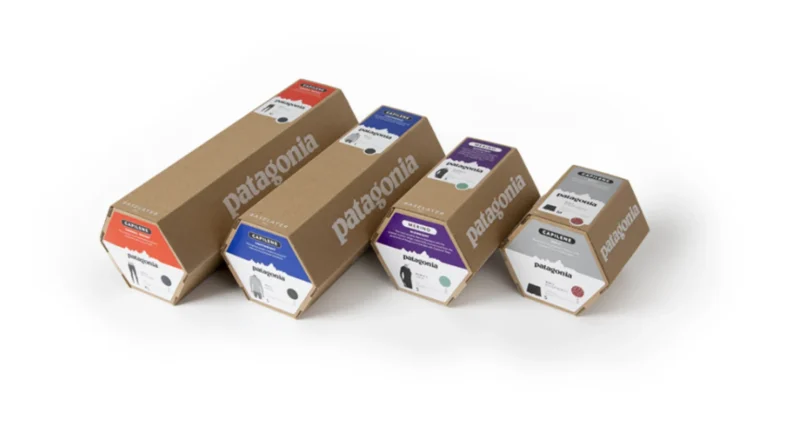
Patagonia is frequently cited as an example of sustainability integrated into brand identity. The company’s environmental commitments are reflected not only in its messaging but also in its repair initiatives, packaging choices and product life cycle programs.
What is particularly interesting from a design perspective is how restraint becomes part of the visual language. The brand often favors clarity and functionality over excessive packaging or unnecessary embellishment.
The lesson is not necessarily to imitate Patagonia’s aesthetic. It is to recognize how sustainability can become an authentic part of a brand’s visual system.
The Principles Behind Sustainable Graphic Design
While every project is different, most sustainable design practices are built around a few core principles.
Designing for Longevity
One of the most effective sustainability strategies is creating work that remains useful for years rather than months.
Many organizations spend significant resources on frequent redesigns driven by short-lived trends. While trends have their place, timeless visual systems often deliver greater long-term value while reducing waste associated with constant replacement.
As designers, we can help clients distinguish between meaningful evolution and unnecessary change. A strong identity system should be flexible enough to adapt over time without requiring a complete overhaul every few years.
Reducing Before You Replace
One of the biggest misconceptions about sustainability is that it begins with choosing environmentally friendly materials. In reality, the most sustainable material is often the material that never gets used.
Many successful packaging redesigns achieve substantial environmental improvements simply by reducing material usage. Smaller packaging formats, fewer printed inserts and simplified structures often deliver greater benefits than switching to an alternative material alone.
Before asking what sustainable material to use, it is worth asking whether less material is needed in the first place.
Choosing Materials Carefully
Of course, materials still matter. For print and packaging projects, designers may consider options such as:
- Recycled paper stocks.
- Forest Stewardship Council-certified papers.
- Vegetable-based inks.
- Water-based coatings, and archival-quality fine art paper for premium pieces.
- Post-consumer recycled materials.
The best choice depends on the project’s goals, budget and disposal realities. A material that is technically recyclable may not be environmentally beneficial if local recycling infrastructure cannot process it.
This is especially important as the industry shifts toward materials like kraft paper, cardboard and other biodegradable options. These choices are often framed as “sustainable,” but still depend on how efficiently they can be handled at the end of life. Sustainable design works best when it considers real-world outcomes rather than relying solely on labels or certifications.

Apple has steadily reduced packaging size and material usage across multiple product lines while maintaining a premium customer experience. Beyond packaging, the company has also increased its use of recycled materials at scale, with 30% of products shipped containing recycled content, including 100% recycled cobalt in batteries and 100% recycled rare-earth elements in magnets.
From a graphic design perspective, this demonstrates an important principle — sustainability does not have to feel like a compromise.
The packaging remains highly refined because environmental considerations were incorporated into the design process from the beginning rather than added as an afterthought.
The Role of Typography in Sustainable Design
Typography professionals may not immediately think of sustainability when selecting typefaces or building font systems, but typography influences both print and digital efficiency.
In print, type choices can affect overall ink usage. Some typefaces require significantly less ink coverage than others, which can lead to meaningful savings across large production runs.
The bigger takeaway is not that every project should use an “eco-font.” It is that seemingly small design decisions can have measurable environmental consequences when scaled.
Typography also affects digital sustainability. Web fonts contribute to page weight and loading performance. Using excessive font families, multiple unnecessary weights or poorly optimized font files increases data transfer and slows user experiences.
Many designers are now exploring variable fonts because they offer flexibility while potentially reducing overall file size.
How Sustainability Leads to Better Design
One of the most surprising discoveries many designers make is that sustainability frequently improves design quality.
Environmental constraints encourage greater intentionality. When you are trying to reduce materials, streamline packaging or optimize digital performance, every design decision must earn its place. This often results in cleaner layouts, stronger visual hierarchies and more focused communication.
I have found that sustainability and good design frequently pursue the same goal — eliminating unnecessary elements so that what remains works harder and communicates more clearly.
Common Myths About Sustainable Design
Sustainable design is often misunderstood, especially as it becomes more mainstream in both print and digital practice. These misconceptions can make it harder for designers and clients to fully embrace more responsible approaches. Here are a few of the most common myths, clarified with real-world examples.
Sustainable Design Has a Specific “Look”

Many assume eco-friendly design always means muted tones, kraft textures or minimal aesthetics. In reality, sustainability is about production choices and systems, not visual style. Apple demonstrates this well with its premium, highly polished branding while steadily reducing packaging materials. Meanwhile, IKEA maintains bold, colorful retail design while still prioritizing flatpack efficiency and reduced waste.
Digital Design Is Not Impactful
It is easy to assume digital work has no environmental cost, but every interaction still uses energy through servers and devices. Google is a clear example, investing heavily in data center efficiency and renewable energy to reduce the footprint of its digital infrastructure.
Sustainability Always Costs More
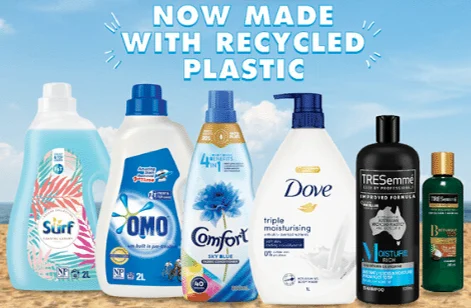
Source: https://www.packagingnews.com.au/sustainability/opinion-unilever-randd-lead-on-plastics-circularity
While some materials carry higher up-front costs, sustainability often reduces long-term expenses by cutting waste and improving efficiency. Unilever has implemented packaging reduction strategies that lower virgin plastic use while also reducing production and logistics costs.
Practical Ways Designers Can Get Started
You do not need to completely overhaul your workflow to make a positive impact. Small changes can add up quickly, especially when applied consistently across multiple projects:
- Audit your recent work: Review past projects and identify where waste occurred, whether through excessive printing, oversized packaging, unnecessary materials or poorly optimized digital assets.
- Start sustainability conversations early: Many environmental decisions are made during strategy and planning stages. Bringing sustainability into initial client discussions creates more opportunities for meaningful improvements.
- Learn more about materials and production methods: Understanding paper stocks, packaging materials, printing processes and recycling systems helps you make more informed recommendations.
- Optimize digital assets: Compress images, streamline web typography, and eliminate unnecessary animations or media that increase page weight and energy consumption.
- Challenge default assumptions: Ask whether a brochure really needs additional pages, whether packaging can be simplified or whether a website feature provides enough value to justify the resources required.
- Design for longevity whenever possible: Create flexible systems that evolve rather than requiring frequent redesigns or complete replacements.
The Future of Sustainable Graphic Design
Sustainable graphic design is quickly becoming part of what clients, consumers and designers expect from great work. Whether you are creating packaging, brand systems or digital experiences, environmental considerations are increasingly shaping design decisions alongside aesthetics and usability.
The good news is that sustainability rarely requires sacrificing creativity. In many cases, it encourages smarter, more intentional solutions. By considering materials, production methods and long-term impact from the start, designers can create work that looks good and contributes to a more responsible future.