
In this article:
- Start With the Brand System, Not the Booth
- Build a Layout That Supports the Brand Message
- Keep Graphics, Color, and Materials Consistent
- Choose a Structure That Can Grow With You
- Make the Booth Easy to Reuse and Refresh
- Frequently Asked Questions
- Conclusion
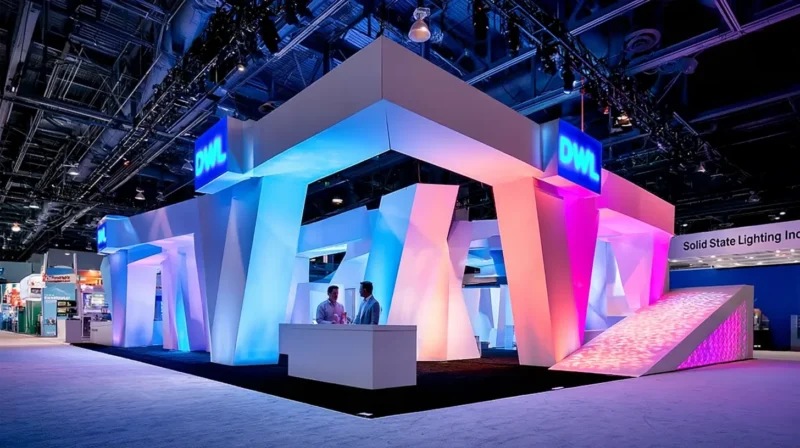
A cohesive booth feels like a natural extension of your brand, not a collection of banners, furniture, and graphics assembled for one event. Good trade show booth design connects your colors, messaging, layout, materials, and visitor experience so people recognize your company quickly and remember it afterward.
For a growing brand, that consistency matters even more. Your booth should work for the show you are attending now while giving you a foundation you can adapt as your footprint, product line, and event schedule expand.
Start With the Brand System, Not the Booth
Start by defining the brand elements that must remain consistent before choosing hardware or furniture. Your booth should use the same core visual language customers already see on your website, packaging, sales materials, and advertising.
Set a simple design system around your existing logo, two or three primary colors, preferred fonts, image style, and one clear value proposition. Then decide which element deserves the strongest visual emphasis.
A growing company often makes the mistake of trying to display everything it offers. That creates a booth that feels busy and makes the visitor work too hard. Choose one main message and a small number of supporting proof points instead.
Build a Layout That Supports the Brand Message
Your layout should make the brand easy to understand while giving visitors a natural reason to enter. A strong design also considers what people can see from the aisle, where conversations happen, and where staff can move without blocking the display.
| Booth area | Primary job | Design priority |
| Back wall | Brand recognition | Logo, core message, strong visual |
| Front area | Entry and attraction | Open sight lines |
| Product/demo area | Show value | One clear focal point |
| Conversation area | Build relationships | Comfortable but compact seating |
| Storage | Hide operational clutter | Integrated or concealed |
For a 10×10 booth, keep the experience simple. One dominant focal point usually works better than several competing displays. Larger spaces can support separate demonstration and meeting zones, but the visual connection between them should remain obvious.

Get 300+ Fonts for FREE
Enter your email to download our 100% free "Font Lover's Bundle". For commercial & personal use. No royalties. No fees. No attribution. 100% free to use anywhere.
Keep Graphics, Color, and Materials Consistent
Consistency comes from repeating a few deliberate visual choices across every surface rather than putting the logo everywhere.
Use this checklist when approving the design:
- Color: Keep the booth within the established brand palette and check how colors appear under exhibition lighting.
- Typography: Limit the number of fonts and keep headline treatments consistent with other marketing materials.
- Graphics: Use one visual style instead of mixing unrelated stock images, illustrations, and product photography.
- Messaging: Repeat the same positioning language visitors encounter online and in sales conversations.
- Materials: Coordinate finishes, flooring, counters, furniture, and graphics so they feel like one environment.
The goal is recognition without visual overload. Someone should be able to glance at the booth and connect it with your company before reading every detail.
Choose a Structure That Can Grow With You
Choose the booth structure according to how often you exhibit, how far you travel, and how quickly your brand may change. Portable systems can suit first-time exhibitors, while modular structures make more sense when a company expects to adapt the same core assets to different footprints.
For outdoor events,custom event canopies can also extend the same identity to spaces where a traditional indoor exhibit system is impractical.
Think beyond the initial purchase. A lightweight structure that packs efficiently, accepts replacement graphics, and can be rearranged for a larger footprint may deliver more value than a highly customized booth designed for one specific show.
Make the Booth Easy to Reuse and Refresh
Design the permanent parts of the booth separately from the parts most likely to change. Your frame, counters, lighting, and storage can stay consistent while graphics, messaging, product panels, or campaign visuals are replaced.
That approach is especially useful for growing brands because it allows the booth to evolve without starting the design process from zero. Document component sizes, graphic specifications, setup instructions, and packing requirements so another team member can reproduce the setup reliably at the next event.
Frequently Asked Questions
How much should a growing brand spend on trade show booth design?
There is no single ideal budget because costs depend on booth size, structure, graphics, lighting, shipping, and reuse. A scalable system can make more financial sense when you expect to exhibit at multiple events.
How early should we start designing a trade show booth?
Start several weeks before the event, and allow more time for custom fabrication or complex installations. Early planning also leaves room for graphic revisions, shipping, and show-service deadlines.
How can a small booth look professional without feeling crowded?
Use one strong focal point, clear vertical branding, open sight lines, and hidden storage. Avoid filling every available surface with products or text.
How do we keep our booth consistent with the rest of our brand?
Start with the same colors, typography, imagery, messaging, and visual rules used across your other marketing channels. The booth should feel like another brand touchpoint, not a separate identity.
Should we choose custom, modular, or portable materials?
Match the structure to your event frequency, budget, transport needs, and expected growth. Modular and reusable systems can be particularly practical when a brand needs to adapt its exhibit to different spaces.
Conclusion
Effective trade show booth design starts with a clear brand system and carries that identity through layout, graphics, materials, and visitor flow. For a growing brand, the smartest booth is one that looks distinctive today, stays consistent across every event, and can evolve without requiring a completely new design each time. start designing your booth and tent withExpoPrint .