


In this article:
- What Is A Creative Brand Strategy?
- Why Your Business Should Prioritize A Creative Brand Strategy: 5 Key Benefits
- How To Build A Creative Brand Strategy That Shapes How People See You: 8 Easy-To-Follow Steps
- 5 Creative Brand Strategy Examples You Can Learn From
- Conclusion
So many brands are loud and polished, yet somehow invisible. That is because they spend their time trying to look impressive. The brands that convert spend their time being obvious. Obvious choice. Obvious fit. Obvious next step. And that is exactly what a creative brand strategy gives you.
If you want to be in the same league, you are exactly where you should be. We will show you how to create a creative brand strategy that makes people say yes without overthinking it. We will also share examples of brands that executed it perfectly, so you can take what works and apply it fast.
What Is A Creative Brand Strategy?
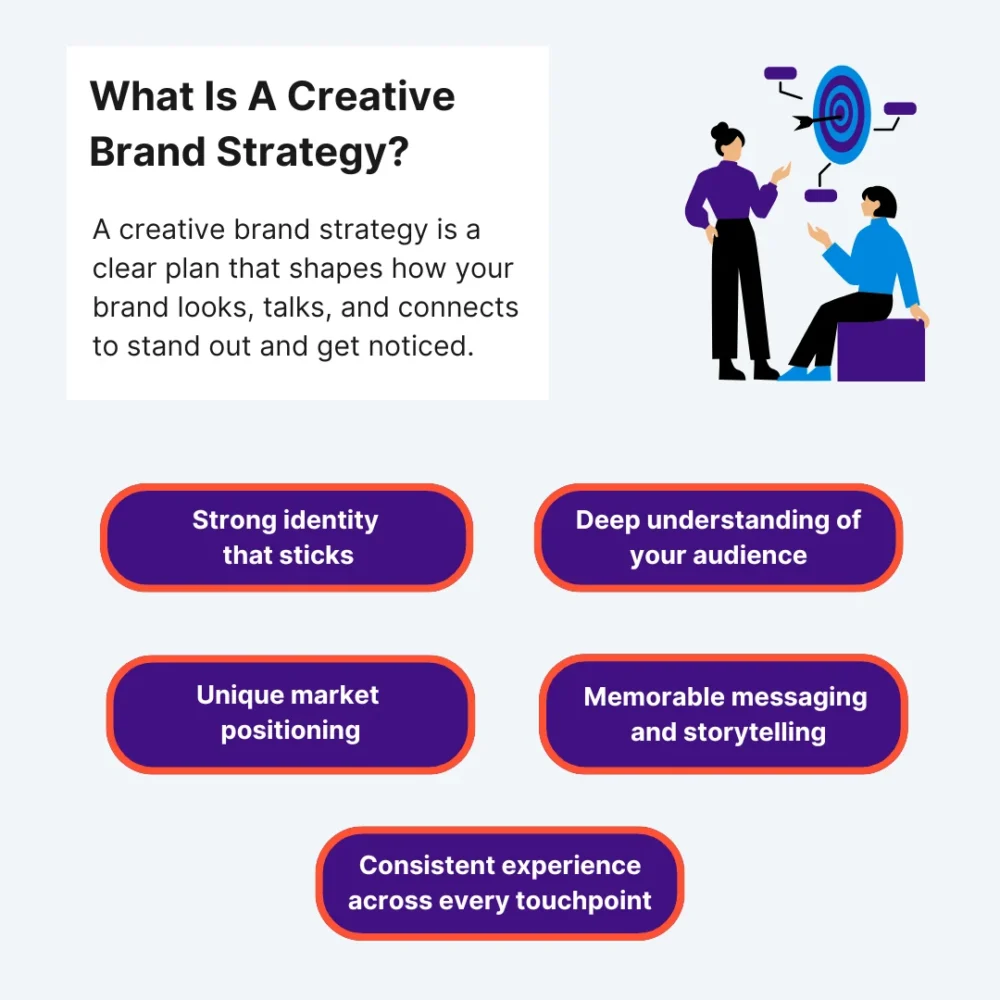
A creative brand strategy is a structured plan that defines how a brand expresses its identity, communicates with its audience, and differentiates itself from competitors – but with a focus on storytelling and creative ideas.
The key components of a successful brand strategy are:
- Strong Brand Identity : The visual, verbal, and emotional elements that represent your brand (logo, colors, tone, messaging).
- Target Audience Understanding : A deep knowledge of who your customers are and how they perceive brands.
- Positioning & Differentiation : How your brand stands out in the market and the unique value it offers.
- Creative Messaging & Storytelling : Using an imaginative and consistent brand story that engages and influences your audience.
- Experience Design : Designing every touchpoint – from social media posts to product packaging – to present your brand creatively.
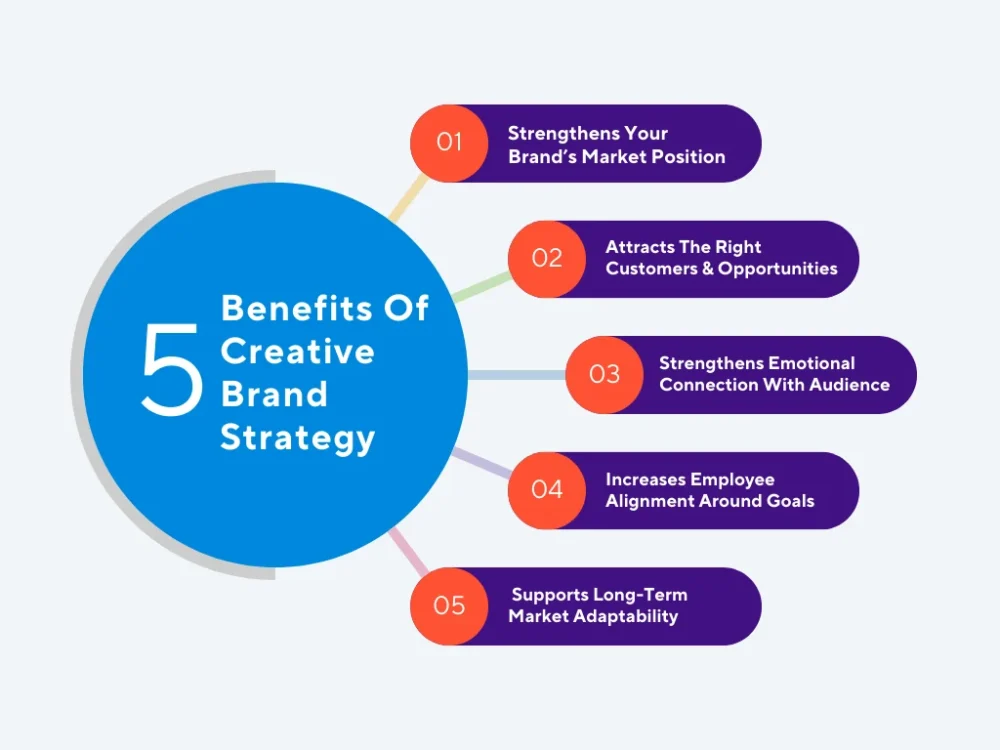
Why Your Business Should Prioritize A Creative Brand Strategy: 5 Key Benefits

Get 300+ Fonts for FREE
Enter your email to download our 100% free "Font Lover's Bundle". For commercial & personal use. No royalties. No fees. No attribution. 100% free to use anywhere.
Here’s how a creative brand strategy works to give your business real traction.
1. Strengthens Your Brand’s Market Position
Most businesses float in the middle of their market without realizing it. Not cheap enough to win on price. Not distinct enough to win on brand value. A creative brand strategy forces you out of that middle .
It tells the world exactly why you exist and why you matter – before anyone asks. The power of a creative brand strategy lies in clarity. It is the difference between being “just another choice” and being the obvious pick. When your brand is clear and original, competitors stop mattering , and your audience instantly knows where you stand.
2. Attracts The Right Customers & Opportunities
Traffic alone does not build a business. Fit does.
With an effective brand strategy, every element of your brand acts like a signal flare for those who fit. Your messaging removes the wrong leads automatically . Your voice and visuals leave a lasting impression and draw in clients and opportunities that match your goals.
Suddenly, the people who find you are already halfway sold – because your brand already sounds like home to them.
3. Strengthens Emotional Connection With Your Audience
Connection does not come from storytelling exercises or brand archetypes. It comes from your brand showing that it understands how your customer thinks in real life . A creative brand strategy maps the internal conversation your buyer is already having to ensure that your brand remains relevant.
Over time, this leads to preference. People stop comparing you as aggressively . They stop needing reassurance. They come back faster. They recommend you more confidently. A loyal customer base becomes a byproduct of relevance – not retention campaigns.
4. Increases Employee Alignment Around Core Goals
Most creative teams work hard. Many teams work in different directions.
A creative brand strategy gives your entire company a shared operating system . It clarifies what matters and how trade-offs get made. Marketing team stops assuming. Sales stops improvising. Product stops overbuilding. Customer support stops reacting. Everyone moves with the same logic – even across different functions.
5. Supports Long-Term Market Adaptability
Tactics expire. Platforms shift. Audiences evolve. Businesses that grow through isolated marketing campaigns struggle when their main channel stops working.
A great brand strategy gives your business core values to lean on, even as things change . New offers, new markets, messaging shifts, platform changes – you can do everything without making people relearn who you are.
How To Build A Creative Brand Strategy That Shapes How People See You: 8 Easy-To-Follow Steps
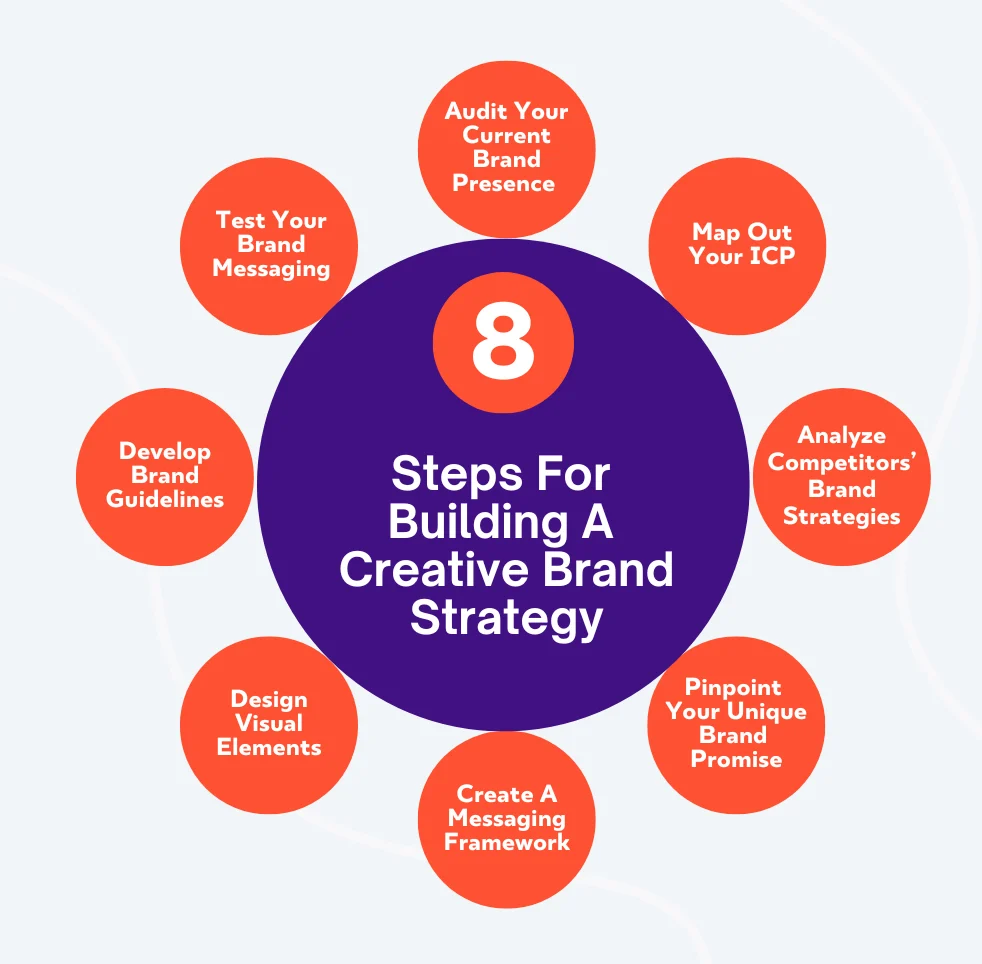
Getting people to see your brand the way you want isn’t random. These 8 steps show exactly how to shape brand perception so every customer interaction works in your favor.
1. Audit Your Current Brand Presence Thoroughly
Here, you are not reviewing your brand as the founder or marketer. You are reviewing it as a distracted and skeptical buyer with zero patience. What shows up first. What stands out. What confuses. What gets ignored. What creates trust. What creates doubt.
You are also looking for pattern breaks. Where your website says one thing and your ads say another. These gaps quietly kill conversion. And they don’t show up in dashboards. They show up in hesitation and stalled deals.
What To Do :
- Screenshot every page a first-time visitor sees within their first 3 minutes. Include landing pages, pricing, checkout, onboarding, and confirmation emails.
- Collect the last 50 customer-facing messages from sales and support teams. Look for mismatches in promises and language.
- Search your brand name plus “reviews,” “scam,” “worth it,” and “alternatives.” Document patterns in how people talk about you.
- Identify where people hesitate or drop off . Write down exactly what they see at that moment.
2. Map Out Your Ideal Customer Profile
You have to find the customers who already move fastest, pay easiest, stay longest, and cause the fewest problems.
And no, you are not defining personality traits. You are defining decision behavior . How this person evaluates options. What makes them confident. What makes them stop. What makes them walk away.
This brand persona becomes the filter for everything – content, offers, marketing materials, pricing, partnerships, product decisions.
What To Do :
- Pull your last 20 closed deals and highlight which ones had the shortest sales cycle and highest lifetime value.
- Review churned customers and flag the ones that never truly fit from the start.
- Write down the exact moment your best customers decided to search for a creative solution and what triggered that decision.
- Define one core buyer type with a specific role, context, urgency level, and buying environment.
3. Analyze Competitors’ Brand Strategies In Detail
It is about being strategically separated for marketing success. Map how buyers are currently trained to think and how decisions are framed before they ever encounter you.
You are also identifying what competitors overemphasize and what they quietly underdeliver. This exposes both crowded message zones and open positioning territory. This step protects you from building a brand equity that sounds strong in isolation but disappears in a real market.
What To Do :
- Pick 5 competitors and note everything about them – homepage headline, subheadline, call-to-action, pricing structure, primary proof point.
- Write one sentence in simple language summarizing each competitor’s main promise.
- Use a YouTube downloader to collect competitors’ ads and product demos so you can compare positioning side by side and spot patterns they repeat across campaigns.
- Track how each competitor handles objections and trust signals across their funnel.
4. Pinpoint Your Unique Brand Promise
Your brand promise isn’t built from tangible assets alone. It is built from what those brand assets actually do for your target customers and how clearly you follow through on that – every single time. Decide what your business becomes known for. Not what you want to be known for – what you can actually deliver consistently and at scale.
Your brand positioning statement is not a tagline. It decides what people walk in expecting and what they walk out judging. This promise becomes the center of everything you say and do – messaging, offers, customer experience, digital marketing strategy. Without it, your brand drifts. With it, your brand sharpens.
What To Do :
- Write a single sentence that says exactly what your business delivers and who it delivers it for.
- Check if your product and onboarding actually back up that promise.
- Ask 5 customers to describe what they think you stand for in one sentence. Then compare it to what you wrote.
- Adjust your promise until it lines up with reality and your goals – without overpromising.
5. Create A Messaging Framework For Every Touchpoint
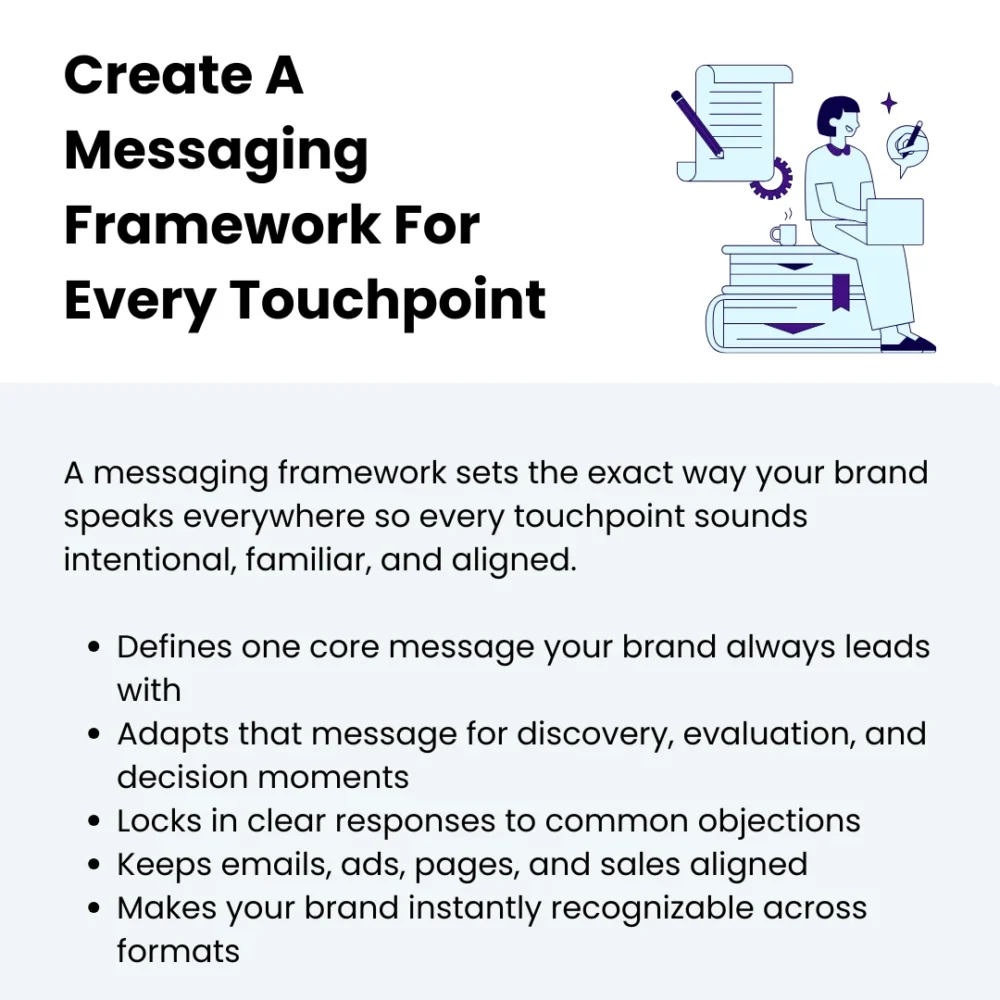
Most brands sound different everywhere because nobody decided what comes first and what never gets said. A messaging framework fixes that. It gives your brand a default way of speaking in every situation so people recognize you even when the format changes.
It is about deciding how your brand thinks out loud. Brand consistency removes confusion for your team and removes friction for your audience. Every email, ad, page, pitch, and notification starts from the same logic, not personal preference.
What To Do :
- Write one main message that shows up everywhere your brand shows up – no matter the marketing channel.
- Create 3 variations of that message for different moments – discovery, evaluation, and decision.
- Decide exactly how your brand responds to your top 5 objections so no one is making it up on the fly.
- Build a consistent brand message guide that pairs each touchpoint (ads, landing pages, sales calls, onboarding) to the right message type.
6. Design Visual Elements That Reflect Your Brand Personality
People decide how to interpret your brand before they read anything. Your visuals do that work. Every spacing choice, layout pattern, image style, and motion behavior shows how your business operates.
You want your brand to be easy to recognize and easy to understand. When visuals jump around, people have to work to make sense of you. When visual identity is consistent, understanding becomes automatic.
What To Do :
- Decide what people should notice first, second, and third on every page. Then set sizes and layout rules that make that happen.
- Build 3 page formats you reuse for your most important pages. Write down exactly where each one belongs.
- Get specific about the types of images you use , how they are shot, what they show, and how they are cropped.
- Set clear rules for how things move on your site – from hover effects to loading moments to scrolling behavior.
7. Develop Brand Guidelines For Internal & External Use
Your brand becomes fragile when only one or two people know how to use it correctly. Guidelines remove that dependency. They make your brand executable by anyone who touches it, inside or outside your company.
What To Do :
- Create one place where all documents are saved – messaging rules, visual standards, tone guidelines, creative briefs, usage examples.
- Add real examples for everyday situations – ads, emails, landing pages, sales decks, onboarding flows, digital catalogs, social posts.
- Write simple rules for what to do when something does not fit the template, so no one gets stuck.
- Build a short onboarding module that shows new hires how to use the brand in their role during the first week.
8. Test Your Brand Messaging With Real Audiences
Assumptions don’t build successful brands. Evidence does. Testing shows you what people actually understand through your creative efforts – not what you hope they understand. It is about validating interpretation. What people think you sell. Who they think you serve. What outcome they expect. What they misunderstand. Every test removes one layer of assumption from your brand.
What To Do :
- Show new visitors your homepage for just a few seconds . Then ask them to tell you what your business does and who it is for.
- Try different opening lines in real sales outreach and see which ones start more productive conversations – not just any reply.
- Test a few different angles on your landing pages and measure clarity by looking at bounce rates and conversions.
- Talk to recent buyers and ask what almost made them walk away and what they thought would happen before purchasing.
5 Creative Brand Strategy Examples You Can Learn From
Brands can talk all they want, but only a few actually get chosen. These 5 examples show how a creative brand strategy makes every choice obvious and unforgettable.
1. IceCartel
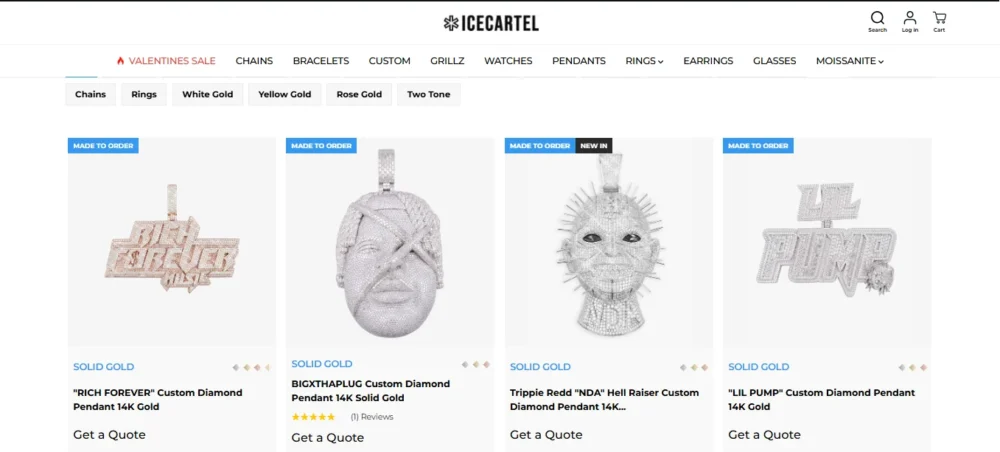
Here’s a brand that refuses to play quietly in the middle of the jewelry market. Instead of vague luxury talk, IceCartel leans into a niche that has recognizable brand identity currency – hip‑hop culture, bold style, personalized expression.
Their site does more than show products – it positions their custom chains and pendants as extensions of personal story and status . They use real names and symbols people actually care about – initials, custom logos, even pendants tied to personalities.
That level of concreteness turns browsing into imagination. A visitor doesn’t just see a chain; they see how it would announce their presence in a room. IceCartel’s marketing efforts anchor design in recognizable cultural signals that their target audience already values, and then amplifies them with clear proof of craft and history from decades in the diamond district.
Lessons you can apply:
- Tie products to real cultural or personal identity cues rather than generic aesthetics.
- Position customization as self‑expression, not just extra options.
- Use origin stories tied to craft and history for credibility.
2. MedicalAlertBuyersGuide

MedicalAlertBuyersGuide is selling clarity in decision-making for a deeply emotional need. They occupy the exact space most competitors ignore – helping people compare life‑critical products without pressure or sales spin.
Rather than pushing a single product, their strategy is to sort through the market clutter and show clear and structured comparisons based on rigorous market research and hands‑on testing. That means visitors come with a problem – “Which system will help my loved one?” – and leave with a defensible answer instead of uncertainty.
They operationalize expert analysis into pages that break down features, costs, pros, and cons side by side, so that the reader doesn’t have to assume which choice is best. Their brand becomes synonymous with informed choice , not product hype, and that makes people trust them even before they click through links.
Lessons you can apply:
- Position your brand as the decision helper – not just a product promoter.
- Use side‑by‑side comparisons that answer “which is right for my exact situation.”
- Lean into expert validation and transparent methodology.
3. Mannequin Mall
At first glance, a site selling dress forms and display mannequins might seem mundane. Mannequin Mall’s creative brand strength is that it treats utility as identity . Their visuals and collection organization connect with people who already know exactly what problem they are solving – fit, display quality, size accuracy.
They don’t try to turn fashion tools into lifestyle items – they lean into specialization. Everything on their site shows that this is the place professionals go when they need dependable display and a breadth of options for real use cases.
Because their niche is tight, their brand can stop explaining why someone might need a dress form and focus on which one is right – without dilution. That straightforward confidence teaches visitors that it is a specialty workshop that solves a real problem with real tools.
Lessons you can apply:
- Own your niche with language that assumes competence.
- Organize offerings by real user scenarios (e.g., tailoring vs. retail display).
- Visually prioritize product specs that matter most to your audience.
4. Freeburg Law

Freeburg Law criminal defense attorneys do something many professional services miss. It centers every message around specific and real outcomes for real situations – not abstract legal prowess.
Rather than generic statements about “great service” or “top legal team,” qualifying text names specific criminal charges and client contexts that Wyoming residents might actually face. It is about concrete scenarios where the visitor already knows they have a problem .
The language is direct, and the structure shows that immediacy. Each section is a slice of usefulness –- what the legal process looks like, how Freeburg approaches defense, and what a potential client should expect next. That kind of clarity short‑circuits indecision because people see their exact situation mirrored in the copy.
Lessons you can apply:
- Name the exact situations your audience is facing.
- Use outcome‑over‑feature messaging (what happens after) rather than what you do.
- Structure content around visitor context, not service hierarchy.
5. Uproas

Uproas operates in a complex niche – premium ad infrastructure for high‑spend advertisers. Their brand strategy repositions a hidden piece of tech infrastructure – agency ad accounts – as a forward‑facing growth catalyst.
Rather than explaining how their systems work, they explain what those systems open up – uninterrupted campaigns, no spending caps, avoidance of common bans, and access to multiple platforms without bureaucratic friction.
For advertisers who have been hampered by platform restrictions, this repositioning makes Uproas a growth enabler that removes structural issues . Their messaging focuses on real operational pain points and maps their solution directly to outcomes like stability and expanded reach. That gives their brand a distinct posture: reliable infrastructure that actually enables scale
Lessons you can apply:
- Reframe technical offerings as unlocks on real constraints.
- Lead with the problem your audience already knows they have.
- Turn operational pain points into positioning opportunities.
Conclusion
What makes a creative brand strategy convert isn’t cleverness. It is restraint. By the time someone reaches the end of your funnel, the choice should already be settled. Not because you pushed harder, but because everything they saw along the way lined up cleanly. So don’t chase originality for applause. Chase clarity for outcomes. Let your messaging do one job at a time.