

In this article:
- Why Your Clients Are Turning to Generative AI
- Read Between the Lines to Fulfill Clients' Needs
- What Can You Bring to the Table That AI Can't?
- Understanding Nuances and Reading the Room
- How to Create a Compelling Value Proposition
- Identify and Achieve Your Client's Core Goals
- Communicating the Value of the Human Element
- You Can Make Working With Generative AI Work
If you feel anxious about AI replacing you, you’re not alone. As I’ve seen AI get more advanced, I’ve felt that fear myself.
The problem is that many people frame the AI age as a doomsday prophecy for creative professionals. Change is scary, but it isn’t the end of your industry or your career.
If you use AI strategically, you can actually generate more demand for your work while retaining your top clients. The key is repositioning yourself from executor to strategic director. You must become someone who knows when to leverage AI and when human expertise is nonnegotiable.
Why Your Clients Are Turning to Generative AI
To increase your client retention rate, you need to understand why people are opting for AI tools over human-generated content. The obvious benefits include speed, cost and convenience. From a company’s perspective, switching to AI is a logical decision. It’s business, not personal.
The obvious benefits include speed, cost and convenience. From a company’s perspective, switching to AI for certain projects makes sense when budgets are tight or deadlines are impossible to meet.
It may surprise you to find out consumers aren’t universally opposed to AI-generated content. According to a 2024 YouGov survey, 39% are comfortable with AI generating product images for advertising in place of product photography.
This consumer acceptance gives clients confidence that AI can handle routine visual work. They’re not wrong. This technology excels at repetitive, template-based design tasks.

Get 300+ Fonts for FREE
Enter your email to download our 100% free "Font Lover's Bundle". For commercial & personal use. No royalties. No fees. No attribution. 100% free to use anywhere.
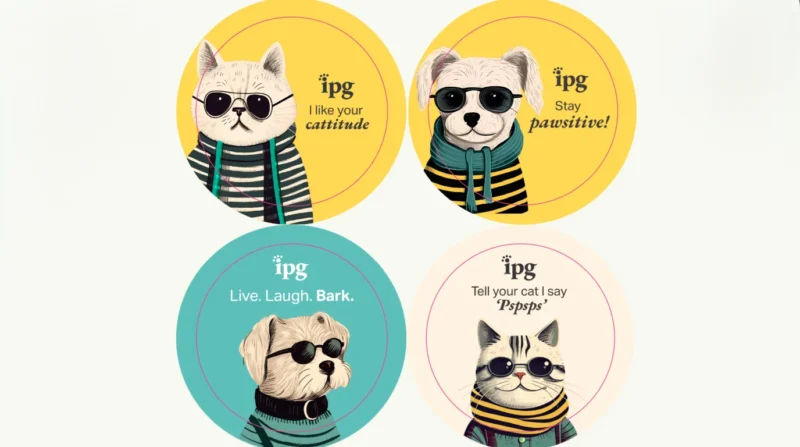
A case study of AI-generated stickers for a pet insurance provider. Source: https://www.superside.com/blog/ai-design-examples
One design agency used AI to create brand illustrations, backgrounds and stickers for a pet insurance provider. It completed the project within 11.5 hours, which would have been virtually impossible without AI. The client approved the artwork immediately, requesting zero revisions.
Read Between the Lines to Fulfill Clients’ Needs
When a client chooses AI art over a human-led project, they aren’t rejecting your portfolio or minimizing your expertise. This decision signals their immediate priorities, such as time or budget constraints.
Your job as a graphic designer is to identify the need behind the decision and propose a higher-value solution.
For example, if a client tells me I’m charging too much, what they’re really saying is “I can do this much cheaper with AI.” They know they can’t do it in-house, but they don’t want to pay my rate because they think a generative model can produce work on the same level.
Still, they started a conversation instead of using AI. Deep down, they know I bring expertise to the table that AI doesn’t. They want to negotiate. I can shift the focus from price to value by explaining that my work isn’t a cost sink, but an investment in their company’s future.
Alternatively, instead of lowering my rate, I can offer to adjust the scope or remove deliverables. To secure their business long-term, I could offer discounts if they agree to a fixed-term contract or a retainer proposal.
What Can You Bring to the Table That AI Can’t?
Your job isn’t to convince your clients never to use AI, but to explain the value of the human element in the creative process. This is where you start repositioning your design services as hybrid or AI-enabled.
AI can create logos, signage, packaging mockups and posters, but it can’t justify its decisions based on years of real-world experience or provide high-level creative guidance. Humans with education, training and hands-on freelance work can provide this expertise.
Going Beyond the Prompt With Strategic Thinking
If clients are undervaluing your expertise, it’s because they don’t understand the effort that goes into your work. This is a common theme among creative professions because years of practice make skills seem innate.
In reality, it takes years to master design techniques. I’ve spent countless hours studying color theory, typography hierarchy, and compositional balance. This knowledge informs every pixel I place.
AI can only answer the questions it’s asked. A human designer’s value lies in asking the right questions and developing a strategy that aligns with business goals, which AI cannot do without someone prompting it.
Using an AI art prompt generator is one way designers can accelerate the ideation stage of that process, generating a structured starting point that their own strategic thinking then shapes into something genuinely purposeful.
Graphic designers must consider how color, texture, shape, space, balance, harmony and typography work independently and together. AI may be trained on successful campaigns, but it doesn’t really understand graphic design elements.
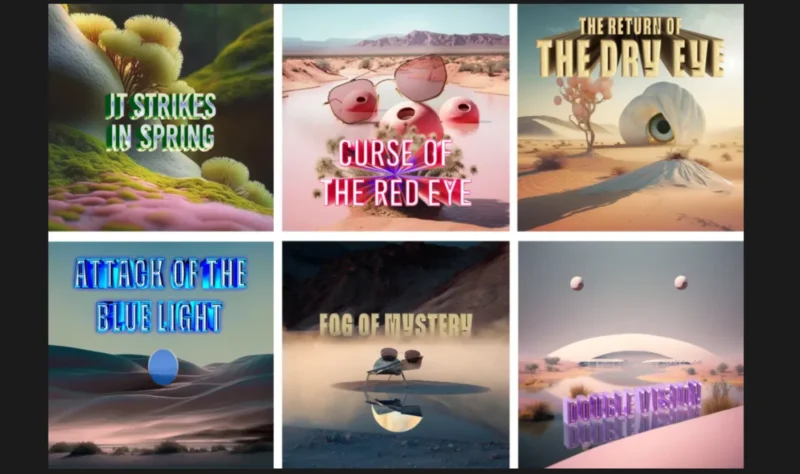
Take the campaign created for Georgetown Optician, a high-end eyewear retailer, for example. The agency’s co-founder and chief creative officer revealed the project required hours of prompting and extensive knowledge of image-making to guide the design in the right direction.
The final result was unique and stunning, but it took a human creative director with deep expertise to achieve it. That’s the value proposition. You’re the strategist who knows how to extract AI’s potential while avoiding its pitfalls.
Understanding Nuances and Reading the Room
The ability to understand context, social cues and complex emotional needs is uniquely human. AI is a “yes-man,” meaning it agrees with everything users say because it is designed to please users by affirming their preferences and opinions.
Designers can provide critical pushback and guidance based on hands-on experience. I’ve told clients their favorite color scheme won’t work for their target demographic, or that their requested layout contradicts accessibility standards.
While human and AI art are becoming difficult to distinguish visually, generative models can’t reason as you can. Their art is only as good as their prompts. When you design something, every pixel is intentional. You’re making hundreds of micro-decisions based on strategic thinking, brand guidelines and user experience principles.
Research shows AI can’t accurately replicate human judgment. Even advanced models score just 40.8 out of 100 when simulating human behavior. Unlike an algorithm, you can read the room, understand stakeholder dynamics and navigate the messy human context.
Building Emotional Connections With Storytelling
Authentic brand stories and emotional resonance come from human experience. I can draw on personal memories, cultural knowledge and empathy to create designs that genuinely connect with audiences.
AI tells great stories because it has been trained on more works than I could ever read in my lifetime. However, it simply connects words, whereas I can bring my lived experience and personality to the table. That’s the difference between technically competent design and work that truly resonates.
Consumers are skeptical about AI-generated creativity, which backs up this idea. According to Vogue’s consumer perception survey, less than 24% agree AI-generated images are as valuable as human-made creative work.
They fear a loss of creativity from brands using AI. You can position yourself as the antidote to that concern. You are the human creative who ensures their brand maintains authenticity and emotional depth.
How to Create a Compelling Value Proposition
You need to distinguish your graphic design services from generative AI’s capabilities. Reposition yourself as an innovative creative who is willing to embrace hybrid workflows to elevate your craft.
Frame Yourself as a Business-Savvy Partner
The saying “the customer is always right” doesn’t always stand true. Sometimes, clients make requests that contradict best practices or lag behind current trends. Algorithms are yes-men and won’t point this out. You can and should position this as one of your core value propositions.
The demand for AI-related work increased by 60% from 2024 to 2025, proving more companies are seeking AI-literate creative partners. While they see the value in AI, they realize this technology can’t replace the business acumen you bring. Frame yourself as a business-savvy partner who protects clients from costly mistakes.
I tell prospective clients that I’m not just designing their website or logo. I’m protecting their brand equity and ensuring their visual identity drives business results. That shifts the conversation from “how much does this cost” to “what’s the return on investment.”
Emphasize Your Role in Brand Consistency
If AI does something really well, that’s because it has a lot of training data. This means that the concept has been done many, many times. AI can’t create something truly original. You can use this fact to position yourself as a key driver of brand distinction.
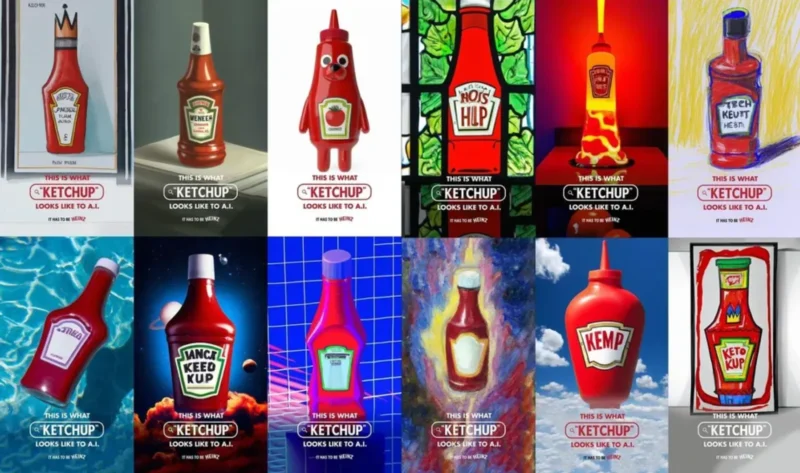
Heinz demonstrated this in 2022 when it asked a generative model to create images of ketchup. Regardless of whether it added “synthwave” or “street art” to the prompt, the model consistently created images that resembled Heinz products. If its competitors had tried to create low-cost ad campaigns with AI, they might’ve inadvertently promoted it.
You also play a vital role in brand consistency, as most models don’t have a “memory.” While AI can generate endless variations, a human director is needed to ensure all assets are cohesive and serve a singular, consistent brand vision over time.
I’ve worked with clients who tried using AI to extend their brand assets and ended up with visual chaos. They came back to me because they needed someone who understood their brand guidelines, their evolution and their strategic direction.
Identify and Achieve Your Client’s Core Goals
Focus on the skill of translating a vague client request into a tangible business outcome. This is a strategic function.
When a client says they want a “modern, clean website,” I dig deeper to understand what business problem they’re solving. Are they trying to increase conversions, attract a younger demographic or establish premium positioning?
The ability to ask these questions and align design decisions with measurable business outcomes is what separates strategic designers from order-takers. AI can execute tasks, but it can’t conduct discovery.
This strategic approach can save you hours of revisions by ensuring you’re solving the right problem from the start. Position this as a value-add that justifies your premium pricing.
Communicating the Value of the Human Element
With all the talk of AI replacing humans, many business owners view AI as a threat to graphic design. Reframe their view from “you versus AI” to “you and AI.”
It is a tool you can strategically direct for faster results and better business outcomes. I’ve started telling clients that AI is like having a junior designer who’s incredibly fast but needs constant creative direction.
Clients may feel like they can’t broach the topic without offending you, so you should start the conversation proactively. Update your offerings to reflect any new AI-enabled services.
When clients say “you’re charging too much” or tell you they plan on making edits with AI after you deliver the finished product, remember to read between the lines. Once you understand what they really want, you can pivot to demonstrate your value.
Update your contract language and terms of service to reflect your new offerings and approach. Be as transparent as possible with clients.
Given that 69% of graphic designers expect to use AI in their work, demand for AI-savvy professionals is growing. By explaining where AI can help and where human expertise is needed, you communicate your value. The market will reward transparency.
You Can Make Working With Generative AI Work
It’s the AI age, so more companies are seeking professionals with AI literacy and experience. Clients want designers who understand both the technology and the timeless principles of great design. You can be that person.
I think of this shift like I do mural work, traditional sign painting, calligraphy and pinstriping. These art forms never died out. They’ve become specialty services, which people pay a premium for.
You don’t have to exclusively use AI to succeed. In addition to offering AI-enabled services, offer 100% original designs. This can help you distinguish your services, as some clients will always value the prestige and authenticity of fully human-created work.