

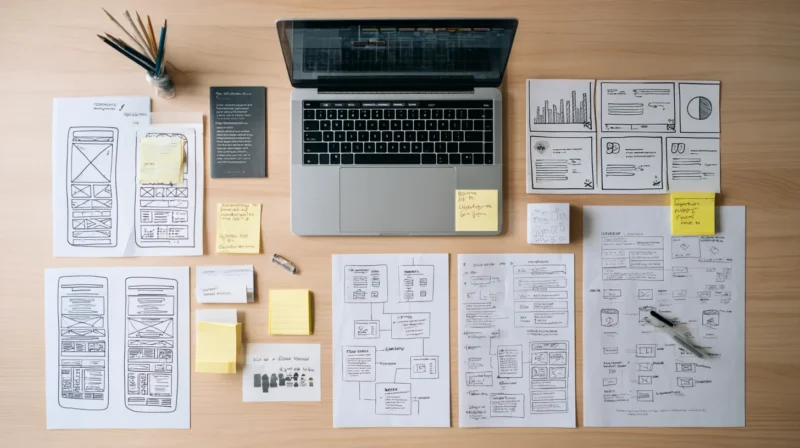
UX research and market research are essential for designing effective digital interfaces and user flows. By combining insights from user behavior with broader market trends, businesses can create digital experiences that truly resonate with their audience. Market research informs UX design by ensuring that decisions align with real user needs and market realities, leading to more relevant and competitive products.
Leading market research agencies like Kadence International emphasize the value of integrating qualitative and quantitative data into the UX process. This synergy allows designers to move beyond assumptions and base their work on solid evidence, refining user interactions and workflows in meaningful ways.
Understanding user flows and interface design through the lens of market research helps uncover pain points and opportunities that drive better engagement. This approach supports the creation of intuitive, satisfying experiences that build customer loyalty and improve overall product success.
Integrating Market Research Into UX Research & User Experience Design
Integrating market research with UX research enriches the design process by grounding decisions in customer preferences and competitive insights. This integration sharpens interface design, refines user flows, optimizes digital experiences, and ensures alignment between business objectives and user needs.
Applying Market Insights to Interface Design
Market research reveals customer segments, preferences, and expectations, which inform the visual and functional elements of interface design. Designers can tailor layouts, color schemes, and content hierarchy to resonate with specific demographics identified through market data.
This approach helps create interfaces that feel familiar and intuitive to targeted user groups, reducing friction and improving engagement.
For example, a market analysis identifying a preference for minimalistic design among younger users can lead UX designers to prioritize simplicity and clarity in the interface, avoiding cluttered or overly complex elements.

Get 300+ Fonts for FREE
Enter your email to download our 100% free "Font Lover's Bundle". For commercial & personal use. No royalties. No fees. No attribution. 100% free to use anywhere.
Enhancing User Flows Through User-Centric Data
Market research complements UX research by providing broader context about user motivations and purchasing behaviors. This data informs the structure of user flows, ensuring they align with how customers naturally navigate and make decisions.
By analyzing customer journey maps alongside market segments, designers can streamline paths to conversion, anticipate user questions, and reduce drop-off points.
Incorporating this insight into user flows leads to efficient navigation paths that serve both business goals and user satisfaction, such as simplifying checkout processes for target users who prioritize speed and convenience.
Optimizing Digital Experiences Based on Consumer Behavior
Consumer behavior insights from market research allow UX teams to fine-tune digital experiences to better meet user expectations. Understanding preferences for mobile use, content consumption, or feature priorities enables customization and personalization.
These adaptations increase usability by fitting the product’s experience to real-world usage patterns. For instance, if market research shows that a significant portion of users access a service via mobile devices during short bursts, designers may prioritize fast loading times and concise content.
Data-driven optimization also identifies potential barriers, such as complex forms or unclear calls-to-action, which can be simplified or reworked based on observed behaviors.
Aligning Business Objectives With User Needs
Successful UX design integrates market research to balance user needs with business goals. Market data informs strategic decisions, helping prioritize features or design elements that fulfill both customer desires and market opportunities.
By aligning design efforts with validated market demand, businesses reduce the risk of developing products that do not resonate with users or fail commercially.
This alignment involves constant communication between design, marketing, and product teams, ensuring that user experience improvements also drive key performance indicators (KPIs) such as conversion rates, retention, and customer lifetime value.
