
In this article:
- Analog Tools Support the Creative Process in Ways Digital Tools Often Can’t
- Physical Writing Improves Memory and Reduces Cognitive Load
- Paper Planners Provide a Visual Overview That Apps Can’t Match
- Fewer Distractions = Better Focus
- Customization Lets Designers Build a Workflow That Actually Works for Them
- Paper Helps Designers Pause, Reflect, and Think Strategically
- The Ritual Matters: Building Stability Into a Creative Life
- Hybrid Systems Work Beautifully, You Don’t Have to Choose One or the Other
For designers, organization isn’t just about keeping track of deadlines, it’s about protecting creative energy. The right workflow tools can shape how ideas form, how projects unfold, and how smoothly a team moves from concept to final delivery. While digital tools dominate many creative workflows, an unexpected trend continues to gain momentum: designers returning to thoughtfully crafted paper planners. Brands like Plum Paper have reimagined classic planners with layouts that support creative thinking, project planning, and day-to-day productivity. In an era defined by screens, pings, and constant digital noise, a physical planner can become an essential grounding tool.
Despite the abundance of apps promising productivity, many creatives find that analog planning offers something digital tools still struggle to replicate: focus, clarity, and intentionality. Paper slows you down just enough to think more deeply, and that’s exactly why planners remain relevant in the design world.
Analog Tools Support the Creative Process in Ways Digital Tools Often Can’t
Design work demands mental agility, emotional awareness, curiosity, and room for divergence before convergence. But digital environments, even the most polished ones, tend to push the brain toward linear, task-driven thinking. Paper, by contrast, invites exploration without constraints.
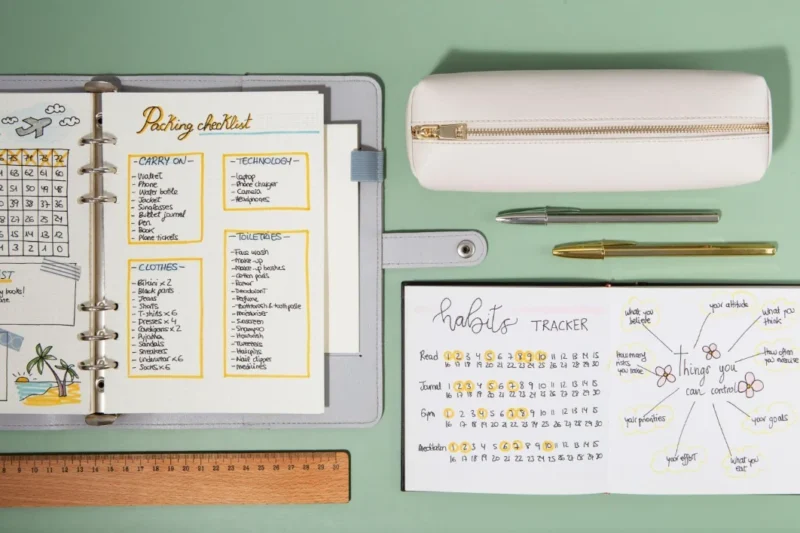
On a blank spread, there are no character limits, no notifications, no pop-up reminders competing for attention. Sketches, lists, ideas, timelines, and messy arrows can coexist naturally on a page. Designers often describe this as a “cognitive breathing room”, a space where inspiration can unfold without the rigid structure of a screen.
Paper planning isn’t nostalgic. It’s practical for anyone who relies on creative flow.
Physical Writing Improves Memory and Reduces Cognitive Load
Neuroscientists and psychologists have long noted that handwriting activates parts of the brain differently than typing. The tactile act of writing helps reinforce memory and reduces the mental clutter that builds up when switching between too many apps.
For designers juggling multiple clients, timelines, feedback cycles, and meetings, relying solely on digital platforms can create cognitive friction. A paper planner acts as a central hub, an external memory system that keeps essential information visible and anchored.

Get 300+ Fonts for FREE
Enter your email to download our 100% free "Font Lover's Bundle". For commercial & personal use. No royalties. No fees. No attribution. 100% free to use anywhere.
Recording ideas by hand slows the mind to a meaningful pace, helping designers interpret information more clearly and retain it longer.
Paper Planners Provide a Visual Overview That Apps Can’t Match
Designers are visual thinkers. We respond to layout, structure, and composition. A digital calendar, no matter how sleek, is still constrained by the size of a screen and the format of the app.
Paper planners offer full visibility.
You can see your week or month in one glance.
You can lay out multiple pages across a table.
You can map out overlapping projects without scrolling.
This visual landscape helps designers identify patterns, spot problems, and allocate creative energy more intentionally. It brings structure to the chaos without flattening everything into lists.
Fewer Distractions \= Better Focus
One of the most underrated benefits of paper planning is that it’s distraction-free. Opening a digital calendar or task app often comes with side trips: checking email, responding to a message, glancing at a notification, or quickly browsing something “just for a second.”
These micro-interruptions kill creativity.
A paper planner offers calm, uninterrupted space. It’s a quiet counterbalance to the digital world, a place where thoughts organize themselves without competing stimuli.
For designers who need deep focus for ideation, layouts, or concept work, that peace is invaluable.
Customization Lets Designers Build a Workflow That Actually Works for Them
That’s where modern paper planners excel. Instead of static layouts, many brands, Plum Paper among them, allow designers to choose formats that match their process:
Weekly spreads for time-blocking.
Project sections for tracking deliverables.
Dot grids for sketching concepts.
Sections for brainstorming, moodboards, or client notes.
Digital tools rely on rigid templates; paper planners evolve with the designer. A planner can grow messy, experimental, and eclectic in ways apps simply cannot.
This adaptability mirrors the design process itself, iterative, expressive, always evolving.
Paper Helps Designers Pause, Reflect, and Think Strategically
The design world moves fast. Clients want quick turnarounds, teams juggle multiple deadlines, and creatives often feel pressure to produce endlessly. A paper planner acts as a natural moment of pause.
Planning on paper, weekly or daily, encourages reflection:
What are the real priorities this week?
Where is my creative energy highest?
Which tasks support strategy rather than busywork?
These questions often get lost in the rush of digital notifications. Paper encourages designers to step back, zoom out, and make thoughtful decisions about their schedule.
The Ritual Matters: Building Stability Into a Creative Life
Many designers talk about the ritual of sitting down with their planner: the quiet morning check-in, the Sunday layout session, the mid-day re-centering moment between meetings. These rituals become anchors.
The design profession is filled with ambiguity. Planning routines offer structure that grounds creativity rather than stifling it.
It’s a practice of intention, not obligation.
Hybrid Systems Work Beautifully, You Don’t Have to Choose One or the Other
The best workflows often blend analog and digital tools. Designers may use apps for communication, asset management, or team collaboration, but rely on their paper planner for high-level planning, ideation, and clarity.
This hybrid approach taps into the strengths of each system.
Digital tools \= efficiency and automation.
Paper tools \= focus and depth.
Together, they create a holistic workflow that supports both productivity and creativity.
Paper planners haven’t survived the digital era out of nostalgia, they’ve survived because they solve real, meaningful problems in the creative process. They give designers space to think, plan, explore, and stay anchored in their work. In a world that demands constant output, a well-designed paper planner can be the quiet structure that keeps projects moving forward with clarity and intention.
For creatives interested in the science of focus and cognitive performance, the American Psychological Association (APA) offers valuable research and insights, including findings on handwriting, memory, and attention that support the ongoing relevance of analog planning tools.