
In this article:
- How the Modern Workplace Has Moved Beyond the Old Model
- Employee Experience Is Now a Design Priority
- Hybrid Work Has Changed What Offices Need to Deliver
- Technology Is Reshaping How We Design Spaces
- Workplace Design as Strategic Business Thinking
- The Growing Importance of Flexibility and Sustainability
- Leadership Is Paying Closer Attention
- Looking Ahead: Adaptability Will Be Key
- Conclusion
For years, many companies treated office design as something of an afterthought — a matter of choosing attractive furniture, laying out desks in neat rows, and ensuring the space looked professional enough for clients. But that limited mindset is shifting quickly in today’s business world.
Smart organisations are now discovering that thoughtfully designed workspaces do much more than create a pleasant backdrop. They actively shape how teams collaborate, how individuals stay focused and energised, and how the entire organisation performs. In a time marked by hybrid work arrangements, fast-moving digital tools, and rising expectations from employees, workplace design has stepped firmly into the spotlight as a genuine strategic advantage.
Forward-thinking leaders have moved past the basic question of whether the office still matters. Instead, they’re asking a more nuanced one: How can our physical environment best support the way people actually want to work, create, and thrive together?
How the Modern Workplace Has Moved Beyond the Old Model
Traditional office environments were designed for a very different era. Think rows of fixed workstations, strict departmental divisions, and a predictable nine-to-five rhythm where everyone stayed in their assigned spot. Meetings were confined to formal boardrooms, and the overall layout prioritised operational consistency and efficient use of floor space over any real sense of flexibility.
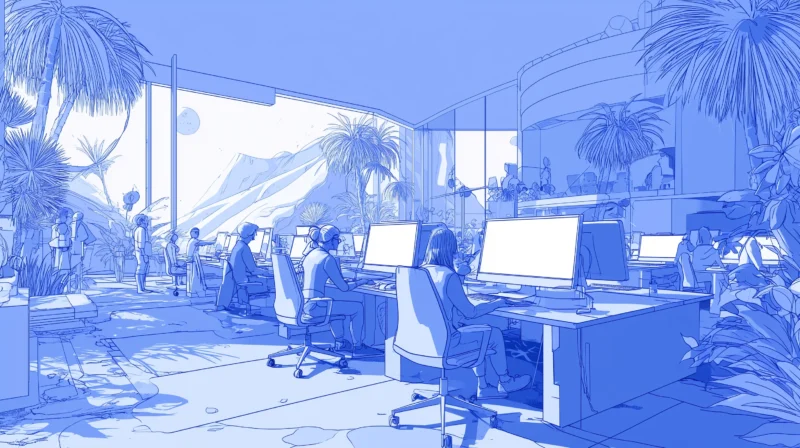
Today’s work patterns look nothing like that. Employees constantly shift between deep, focused individual tasks, lively group brainstorming, virtual meetings with remote colleagues, informal corridor conversations, and cross-functional projects that form and dissolve as needed. This fluid reality demands workspaces that can adapt in real time rather than forcing people to adapt to the space.
As a result, modern workplace design now puts strong emphasis on several key elements:
- True flexibility to accommodate changing team needs
- Spaces that naturally spark collaboration and creativity
- Technology integration that feels effortless rather than obstructive
- Comfort and wellbeing features that help people stay at their best
- Operational flow that reduces friction and supports daily effectiveness
What was once handled purely by facilities teams has evolved into a much broader conversation about performance, culture, and long-term business success.

Get 300+ Fonts for FREE
Enter your email to download our 100% free "Font Lover's Bundle". For commercial & personal use. No royalties. No fees. No attribution. 100% free to use anywhere.
Employee Experience Is Now a Design Priority
One of the most significant trends in recent years has been the elevated focus on employee experience. Both designers and business leaders recognise that the physical environment sends quiet but powerful signals about how much the organisation values its people. It influences everything from daily engagement and morale to talent retention and creative output.
Employees today walk into the office expecting more than just a desk and Wi-Fi. They want environments that feel supportive and intuitive — places where they can concentrate without constant interruptions, connect with colleagues in meaningful ways, and leave at the end of the day feeling energised rather than drained.
Poorly considered layouts often create unnecessary friction:
- open-plan noise that makes focused work difficult
- overcrowded areas
- inefficient circulation paths
- uncomfortable seating that leads to physical strain
In contrast, well-crafted designs help remove these barriers. Natural light, acoustic comfort, varied seating options, and thoughtful zoning can reduce stress, encourage spontaneous interactions, and foster a stronger sense of community.
This is precisely why workplace design is now discussed alongside talent strategy and overall organisational performance.
Hybrid Work Has Changed What Offices Need to Deliver
The widespread adoption of hybrid work has accelerated these changes dramatically. The office is no longer primarily a place for solitary desk work. Instead, it has become a vital hub for human connection — where teams come together for brainstorming sessions, relationship building, strategic alignment, innovation workshops, and the kind of casual interactions that spark fresh ideas.
This evolution has prompted many organisations to move away from traditional, rigid layouts. Contemporary workplaces now thoughtfully combine:
- energetic collaborative zones for group energy
- adaptable meeting areas that can be reconfigured quickly
- quiet focus nooks for deep concentration
- casual breakout spots that invite informal conversations
- technology-enabled workstations that support seamless hybrid participation
The most successful designs look beyond simply maximising occupancy numbers. They create environments that enhance both operational effectiveness and the human experience of work.
Technology Is Reshaping How We Design Spaces
Technology has become deeply embedded in good workplace design rather than an add-on feature. Teams expect reliable support for hybrid meetings, cloud-based collaboration tools, flexible connectivity, and digital workflows that move effortlessly between devices and locations.
Forward-looking designers build adaptability into the core of every project so that spaces can evolve alongside changing technology instead of becoming quickly outdated.
Research from Gensler’s Workplace Surveys consistently underscores the strong connection between intelligent design, improved employee experiences, and measurable business outcomes — particularly in hybrid settings.
Businesses that ignore this shift risk creating workplaces that no longer support how employees communicate, collaborate, or perform. Those embracing flexible, technology-ready environments are building spaces that remain functional and relevant for years to come.
Workplace Design as Strategic Business Thinking
Increasingly, progressive companies treat workplace design as an integral part of broader organisational strategy.
When leaders explore office design strategies for commercial spaces, they evaluate how environments can drive productivity, nurture innovation, enable quick adaptation, and reinforce positive culture.
This represents a fundamental shift: from viewing the office as mere real estate to seeing it as a dynamic asset that helps attract and retain talent, spark creativity, and support sustainable growth.
Forward-thinking organisations increasingly understand that workplace environments directly influence:
- operational efficiency
- workforce engagement
- scalability
- collaboration quality
- long-term adaptability
This broader perspective is reshaping how companies approach office planning decisions.
The Growing Importance of Flexibility and Sustainability
In today’s fast-paced environment, flexibility has become essential. Businesses must respond rapidly to fluctuating team sizes, emerging technologies, shifting work preferences, and periods of growth or restructuring.
Rigid designs make these transitions costly and painful, whereas modular, adaptable approaches allow organisations to refresh spaces efficiently and economically.
Sustainability adds another important layer. Companies are actively seeking designs that optimise energy use, minimise waste, incorporate healthier materials, and promote long-term environmental responsibility.
Flexible environments often achieve both sustainability goals and practical cost savings by extending the usable life of the space while creating healthier, more appealing places for people.
Increasingly, businesses recognise that sustainable workplace environments are not simply environmental initiatives — they also contribute to employee wellbeing, operational efficiency, and long-term financial performance.
Leadership Is Paying Closer Attention
It’s especially encouraging to see these discussions reaching the executive level. Workplace strategy is no longer confined to facilities or operations departments.
C-suite leaders are now directly engaged in conversations about:
- workplace transformation
- hybrid models
- employee experience
- technology integration
- cultural development through design
This reflects a growing understanding that the workplace environment shapes far more than aesthetics alone. It influences how teams collaborate, how businesses innovate, and how organisations adapt to changing market conditions.
The workplace itself is increasingly viewed as an active contributor to organisational success.
Looking Ahead: Adaptability Will Be Key
The most effective workplaces of the future will master the balance between:
- flexibility
- collaboration
- technology
- wellbeing
- operational efficiency
They will go beyond simply housing work — they will actively enhance it.
For many organisations, the office has transformed from “where employees go to work” into a strategic tool for talent attraction, innovation support, cultural strength, and maintaining agility in competitive markets.
Businesses that continue investing in thoughtful workplace design are likely to gain significant advantages as workforce expectations continue evolving.
Conclusion
Workplace design continues evolving rapidly as businesses navigate hybrid realities, digital advancements, and deeper understanding of human needs.
When approached strategically, workplace environments deliver measurable benefits across:
- productivity
- collaboration
- employee satisfaction
- operational performance
- organisational adaptability
Organisations that fully embrace workplace design as a core part of their strategy will be far better positioned to engage their people, adapt to change, and achieve sustained success in the years ahead.