
In this article:
- What It Actually Means to Be an "AI-Friendly" Designer
- Traditional Freelance Platforms: Still Worth Your Time If You Adapt
- Premium and Curated Talent Platforms
- Portfolio-Driven Platforms: Where Clients Come to You
- AI-Native Job Opportunities: The Fastest-Growing Category
- Your Existing Network: The Most Overlooked Channel
- Content as a Client Magnet
- Niche Down to Win Faster
- How to Position Yourself: The Real Lever
- The Bottom Line
Where To Get Design Work as an AI-Friendly Designer
Let me be direct with you: the designers who are struggling right now aren’t struggling because AI came for their jobs. They’re struggling because they haven’t figured out how to use AI as the unfair competitive advantage it actually is.
I’ve watched this shift happen in real time. The freelancers who panicked when Midjourney launched, who posted worried threads about being “replaced,” are the same ones who are still undercharging and overworking. Meanwhile, a quieter group of designers — the ones I’d call AI-friendly — figured out something important: when you combine genuine design taste with AI speed, you become a category of one. You don’t just compete differently. You win differently.
The problem isn’t opportunity. There’s more demand for design work right now than at almost any point in the history of freelancing. The problem is knowing where to look, how to show up, and how to position yourself in a market that’s moving faster than most designers are comfortable with. This guide breaks all of that down — platform by platform, channel by channel.
What It Actually Means to Be an “AI-Friendly” Designer
Before we get into where to find work, it’s worth spending a moment on what clients actually want when they seek out an AI-friendly designer — because it’s probably not what you think.
They’re not looking for someone who uses AI instead of design skills. They’re looking for someone who uses AI to multiply design skills. There’s a real difference. A designer who can fire off prompts in Midjourney but has no sense of hierarchy, color theory, or brand strategy is going to produce work that looks interesting for thirty seconds and then falls completely flat. Clients — especially experienced ones — can feel that gap immediately.
What they actually want is faster turnaround, higher output, and more consistent quality. They want someone who can deliver a complete brand identity in days instead of weeks, spin up thirty social media templates without billing forty hours, or produce a polished landing page mockup in an afternoon rather than a week. The AI is the engine. Your taste, your judgment, and your ability to communicate visually are the driver.
That combination — human creative direction plus AI execution speed — is what separates a commodity designer from a genuinely valuable one right now. And the platforms I’m about to walk you through? They’re the places where that combination is most in demand.
Get 300+ Fonts for FREE
Enter your email to download our 100% free "Font Lover's Bundle". For commercial & personal use. No royalties. No fees. No attribution. 100% free to use anywhere.
Traditional Freelance Platforms: Still Worth Your Time If You Adapt
The big freelance marketplaces aren’t going anywhere. Upwork, Fiverr, and Freelancer.com still drive enormous volume, and for designers who position themselves well, they remain a meaningful source of income. The key word is “position.”
Upwork
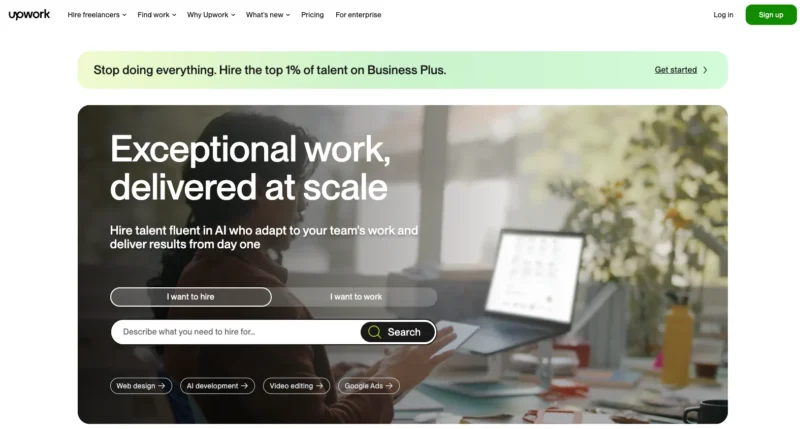
Upwork is where a significant portion of the world’s freelance design work gets posted every single day. The downside is the competition — there are a lot of designers on Upwork, and many of them are racing to the bottom on price. The designers who win on Upwork are the ones who make price irrelevant by selling outcomes instead of hours.
Your Upwork profile shouldn’t lead with “I’m a graphic designer with 5 years of experience.” That describes half the platform. Instead, lead with what you deliver: “I help early-stage startups build complete brand systems in 72 hours.” That’s specific, outcome-oriented, and immediately differentiates you from the generic pool. In your portfolio section, showcase work that demonstrates speed and scale — a branding system you produced in a weekend, a set of 20 social media templates built in a single day. Let the AI-assisted volume tell its own story.
Fiverr
Fiverr’s gig-based model is actually well-suited for productized AI design services. Rather than setting up a generic “logo design” gig, think in terms of packages: a complete visual identity delivered in 48 hours, a full set of social media templates for a single brand, a batch of ad creatives in three size variations. These are the kinds of deliverables that make sense with AI workflows, and they’re also the kinds of deliverables that clients on Fiverr are actively searching for. Fiverr’s search algorithm rewards clear, specific gig titles — don’t bury the lead.
Freelancer.com
Freelancer.com operates on a contest and bidding model that can be hit or miss for designers. Where it shines is for designers who want to build volume quickly and aren’t picky about the specific type of projects. If you’re using AI tools to iterate fast, you can compete in categories where slower designers can’t keep up. Focus your profile on the AI angle — being explicit about your tools and the speed advantage they provide tends to attract the kind of progressive clients who are actually excited to work with AI-native creatives.
The through-line across all three of these platforms: stop selling effort, start selling outcomes. Clients on general marketplaces don’t care how many hours you worked. They care what they’re getting. Reframe your positioning accordingly.
Premium and Curated Talent Platforms
If you’re ready to move upmarket — and if you’re an AI-friendly designer with a strong portfolio, you should absolutely be moving upmarket — there are platforms built specifically for premium creative talent.
Toptal
Toptal markets itself as the top 3% of freelance talent, and it takes that positioning seriously. The vetting process is rigorous: multiple rounds of interviews, a paid trial project, and ongoing performance evaluations. Getting in isn’t easy. But if you do get in, the quality of clients and the rates you can command are genuinely different. Toptal clients aren’t shopping on price — they’re shopping on capability. For an AI-friendly designer who can articulate the business value of faster, higher-volume creative output, Toptal is worth pursuing.
Aquent
Aquent is a staffing and talent platform that places creative professionals — including designers — in both freelance and full-time roles with mid-to-large companies. It operates more like a traditional staffing agency than a self-serve marketplace, which means you’re working with a human recruiter who advocates for you. If you’re a designer who wants the stability of long-term contract engagements rather than constant client acquisition, Aquent is worth having a conversation with. Their client base skews toward enterprise brands with real design budgets.
Botpool
Botpool deserves special attention for AI-friendly designers specifically. It’s a newer freelance marketplace built from the ground up for the AI era, and it’s the platform I’d pay the most attention to if you’re positioning yourself at the intersection of design and AI.
Unlike legacy platforms that retrofitted AI onto existing infrastructure, Botpool was designed specifically to connect businesses with AI-native talent — including designers who use AI tools as a core part of their workflow. The categories that Botpool focuses on (AI development, automation, content, and design) are exactly where AI-friendly designers live. That means you’re not competing for visibility against a sea of traditional freelancers who don’t understand what you do.
The platform also has a genuinely fairer fee structure than the incumbents. Where Fiverr charges 20% and Upwork’s fees can reach similar territory, Botpool operates at a meaningfully smaller commission — which, if you’re billing even a few thousand dollars a month, adds up to real money back in your pocket. For a freelancer billing $5,000 a month, even a 10% difference represents $6,000 a year. That’s not nothing.
One feature I haven’t seen elsewhere: Botpool gives freelancers access to integrated SaaS tools they can resell to clients, which opens up recurring revenue opportunities alongside project work. For a designer who wants to build a more sustainable business rather than just chase the next one-off project, that’s a meaningful differentiator. You can sign up and explore it at botpool.ai.
Awesomic
Awesomic operates as an AI-powered design subscription service, pairing businesses with designers on an ongoing monthly basis. It’s a design-as-a-service model rather than a project-by-project marketplace, which means more predictable income for designers who get placed. If you’re interested in moving toward subscription-style income rather than the feast-or-famine cycle of freelancing, Awesomic is worth looking into. They’re particularly active in tech, SaaS, and startup verticals — exactly where AI-friendly designers tend to be most valued.
Portfolio-Driven Platforms: Where Clients Come to You
Some of the best client relationships start not with a job posting, but with a client discovering your work and reaching out. Portfolio platforms are where that happens — and for AI-friendly designers, they’re also an enormous opportunity to demonstrate something most designers haven’t figured out how to show yet.
Behance
Behance, Adobe’s creative portfolio platform, is one of the highest-traffic destinations on the internet for clients looking to hire designers. Getting noticed on Behance is partly about the quality of your work and partly about how you present it. For AI-friendly designers, the “process” section of a Behance case study is incredibly powerful. Show the workflow: the prompt iteration, the selection process, the human refinement layer. Clients who see that you have a thoughtful, repeatable system for producing great work — not just that you can produce great work occasionally — will reach out faster than you might expect.
Dribbble
Dribbble has both a community layer and an active job board, and it’s one of the few platforms where high-quality visual presentation can drive inbound leads directly. The Dribbble audience skews toward product design, UI/UX, and brand identity — all areas where AI tools can genuinely accelerate output. Consider using your Dribbble feed to document AI-assisted design experiments, before-and-after transformations, or high-volume template systems. Shots that show scale — “here are 30 social templates I built in a single day” — consistently generate more engagement than single-piece showcases.
The broader point about portfolio platforms: they work best when you treat them as an ongoing content strategy rather than a static portfolio dump. Posting regularly, responding to comments, and following other designers keeps your profile visible and active in the platform’s algorithm. The designers who get steady inbound on Behance and Dribbble are the ones who treat it like a channel, not a resume.
AI-Native Job Opportunities: The Fastest-Growing Category
Beyond the traditional freelance and portfolio platforms, there’s an entirely new category of opportunity that barely existed three years ago: AI-specific roles where design skills and AI fluency are both required.
AI Startup Job Boards and Listings
Startups building AI products need designers who can create interfaces, brand systems, and marketing assets — and who understand the space they’re designing for. Searching “AI startup designer” on job boards like LinkedIn or Indeed surfaces a different kind of opportunity than standard design roles. These companies often prioritize AI fluency explicitly in their job postings. They want to know that you’re already using the same kinds of tools their product team is building with. If you are, say so clearly.
Wellfound (formerly AngelList Talent)
Wellfound is the premier platform for startup job listings, and it’s particularly strong in the AI and tech sectors. Many of the companies posting on Wellfound are early-stage, which means they need designers who can work fast, wear multiple hats, and produce quality output without a large team supporting them. That’s a profile that AI-friendly designers fit almost perfectly. Filter by “AI” or “machine learning” in the company category, and you’ll surface companies that are specifically building in the space where your skills are most valued.
Prompt Engineer and Designer Hybrid Roles
One of the more interesting emerging job categories is the “prompt engineer plus visual designer” hybrid. Companies building AI image pipelines, generative marketing systems, or AI-assisted creative tools are actively looking for people who understand both how to direct visual output through prompting and how to apply traditional design judgment to what comes out. This role didn’t exist five years ago. It exists now, and the demand for people who can do it well is outpacing supply by a significant margin.
Your Existing Network: The Most Overlooked Channel
Here’s something I want to say directly, because I don’t think it gets said enough: your past clients are your most immediately actionable source of new revenue. Not a new platform, not a new portfolio, not a new pitch strategy. The people who have already hired you once and trusted you once are the lowest-friction path to more work.
The AI angle gives you a genuine reason to reach back out. Not a generic “just checking in” message — something specific. Tell past clients what’s changed about what you can deliver: you can now produce five times the content volume for the same budget, you can turn around a complete brand refresh in a week instead of a month, you can build a scalable social media template system that their internal team can use to generate ongoing assets without hiring an additional designer.
These aren’t hypothetical. If you’ve been building AI workflows into your process, these are real outcomes you can genuinely offer. And the clients who already know you and trust you are the most receptive audience you’ll ever have. A warm outreach message from a designer who says “I’ve upgraded my process significantly and wanted to offer you something new” hits differently than any cold pitch on a platform ever will.
Content as a Client Magnet
The designers getting consistent, high-quality inbound leads right now aren’t necessarily the ones with the best portfolios. They’re the ones who are showing their work publicly and consistently building authority as AI-friendly creatives.
Twitter / X and LinkedIn
Both platforms reward consistent, valuable content from people who have a clear point of view. For designers, that looks like: sharing AI workflows step by step, posting before-and-after transformations, documenting the process behind a fast turnaround project, or writing short threads about how you approach a specific type of design challenge with AI tools. “I redesigned this SaaS landing page in 45 minutes — here’s exactly how” is the kind of content that drives follows, saves, reposts, and eventually, direct messages from people who want to hire you.
YouTube
Process videos on YouTube have an unusually long tail. A well-made video showing your AI design workflow can generate views — and leads — for years after you post it. You don’t need a large production budget or a polished editing setup to make this work. Screen recordings of your actual process, narrated clearly, are often more valuable to viewers than highly produced content because they’re real and instructive. The audience for this kind of content is growing fast, and most of it isn’t being made yet.
SEO and Blog Content
If you have any interest in building a long-term inbound engine, writing about AI design tools, workflows, and outcomes for your own website or a platform like Medium can drive organic traffic from clients who are searching for exactly what you offer. It takes longer to pay off than social content, but the leads it generates tend to be higher intent and better qualified. A client who found you by searching “AI-friendly designer for SaaS branding” is already sold on the category — they just need to be sold on you specifically.
Niche Down to Win Faster
One of the most consistent things I’ve observed about designers who land great clients quickly is that they’re specific. Not “I do graphic design.” Not even “I do brand design.” But “I build conversion-focused landing pages for early-stage SaaS companies” or “I create ad creative systems for e-commerce brands that need to test 20 variations a week.”
The AI advantage amplifies this dramatically. When you combine a clear niche with AI-powered speed and scale, you become genuinely difficult to compete with. A designer who specializes in YouTube thumbnail systems, for example, and can deliver 30 tested thumbnail variations in a day using AI workflows is not competing with the generalist who delivers two thumbnails in a week. They’re in a completely different category.
The niches that are particularly strong right now for AI-friendly designers include SaaS landing pages and UI mockups, e-commerce product and ad creative, social media content systems at scale, YouTube thumbnails and channel branding, and pitch deck and investor presentation design. Any of these, combined with an AI-powered workflow and clear positioning, creates what I’d call an unfair advantage — not because you’re cheating, but because you’re operating at a speed and consistency level that most designers can’t match.
How to Position Yourself: The Real Lever
Everything I’ve described above — the platforms, the channels, the niches — works better when your positioning is sharp. And sharp positioning, for an AI-friendly designer, means one thing above almost everything else: stop talking about tools and start talking about outcomes.
“I use Midjourney and Figma” is not positioning. It’s a tool list. Clients don’t hire tools. They hire people who solve problems.
“I help startups launch complete visual brands in 48 hours” is positioning. “I build unlimited social content systems for growing DTC brands” is positioning. “I design conversion-focused landing pages 3x faster than a traditional agency” is positioning. Each of those statements tells a client exactly what they’re getting and why it matters to their business. The AI is implied in the speed and scale — you don’t even have to mention it unless the client specifically wants to understand your process.
Your profile headline, your portfolio descriptions, your outreach messages, your social media bio — all of it should be anchored in outcomes, not tools or techniques. When a client reads your positioning and immediately thinks “that’s exactly what I need,” they’ll find you no matter what platform you’re on.
The Bottom Line
AI isn’t replacing designers. It’s sorting them. The designers who move fast, show their process, and sell outcomes are pulling ahead. The ones who are waiting for the market to stabilize before adapting are falling behind. That gap is going to widen, not close.
The good news is that the opportunity in front of AI-friendly designers right now is genuinely significant. There are more clients looking for fast, high-quality, scalable design work than there are designers positioned to deliver it. Platforms like Botpool were built specifically because that demand exists and wasn’t being met. Portfolio platforms like Behance and Dribbble reward designers who show process and scale. Premium platforms like Toptal and Aquent pay well for designers who can demonstrate real capability. And your own network — the clients who already trust you — is sitting right there, waiting for you to tell them what’s changed.
Pick two or three of the channels in this guide, execute on them well, and invest seriously in your positioning. The work is out there. The question is whether clients can find you — and whether, when they do, your positioning makes it obvious that you’re exactly who they’ve been looking for.