

In this article:
- When Work Had a Front Door
- The Upside of Blurred Boundaries
- The Hidden Cost of Being Always On
- Losing the Difference Between Work Mode and Home Mode
- Finding Boundaries in a Boundaryless World
That quick glance at your phone after dinner can easily turn into another hour of work. A message pops up, a calendar reminder appears, and before long, you’re answering emails while sitting on the couch.
Remote work, constant digital communication, and AI-powered tools have made life more flexible than ever. They have also made it harder to tell where work ends and everything else begins.
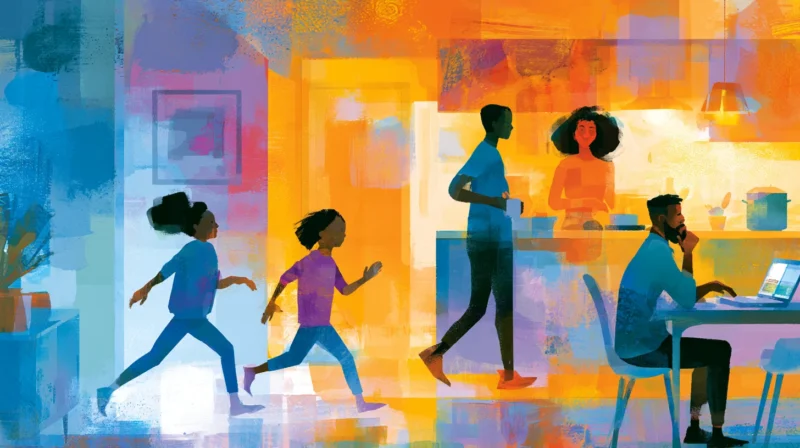
The walls between professional, personal, and social life aren’t as clear as they once were. Some people love the freedom. Others feel like they’re never truly off duty.
Has flexibility given us more freedom, or simply made work available around the clock?
When Work Had a Front Door
There was a time when leaving work actually meant leaving work. The commute home wasn’t always enjoyable, but it acted as a mental reset. You finished your day, drove home, and switched into family or personal life.
Evenings and weekends, you were unavailable. Unless something was urgent, work stayed at work. The office had a front door, and once you walked out of it, your time belonged to you again.
Things have changed. Smartphones, cloud platforms, and collaboration apps mean work can follow you almost anywhere. Emails arrive during dinner. Team chats continue after hours.

Get 300+ Fonts for FREE
Enter your email to download our 100% free "Font Lover's Bundle". For commercial & personal use. No royalties. No fees. No attribution. 100% free to use anywhere.
A quick check of messages often turns into something much bigger.
The Upside of Blurred Boundaries
All this blending of work and life isn’t just a problem. For lots of people, it’s a win. The biggest perk is flexibility. You can work around your family’s needs, take your dog for a walk during the day, or start early because you’re a morning person. No more hours lost in traffic jams or waiting for a late train.
Some of the benefits include:
- Less commuting time.
- Greater autonomy over your daily schedules.
- More freedom to work from different locations.
- Better integration between work and personal responsibilities.
- More control over when and how tasks get done.
AI-powered productivity tools are also changing the work experience. Writing, research, and repetitive tasks can often be completed faster, leaving more time for creative and meaningful work.
It’s particularly relevant for anyone studying a graduate certificate in artificial intelligence online, where the same technologies that enable flexible learning also help blur the lines between work and home.
The Hidden Cost of Being Always On
The trouble starts when flexibility becomes expectation. Many feel pressure to remain visible and available, even when nobody has formally asked them to.
Digital availability has become common. Being online can sometimes feel like proof that you’re committed. A delayed reply may trigger guilt, even late at night.
Notifications don’t stop when your workday ends. Emails, Teams messages, texts, and group chats often spill over into your evenings and weekends. Holidays are interrupted. Bedtime becomes another opportunity to “just check one thing.”
AI tools can create another unexpected challenge. They save time, but higher productivity often leads to higher expectations. Tasks are completed faster, so more tasks arrive to fill the gap.
Efficiency doesn’t always create more leisure. Sometimes it simply creates room for more work.
Without proper recovery, the brain stays switched on. Constant mental engagement can lead to fatigue, reduced focus, irritability, and eventually burnout.
Losing the Difference Between Work Mode and Home Mode
You can be sitting on the couch and still feel like you’re at work. Physically, you’re home. Mentally, you’re somewhere else.
Constant context switching makes it harder to relax. One moment you’re helping with dinner, the next you’re answering a message or thinking about tomorrow’s meeting. The brain never fully settles.
Over time, people can begin to feel busy all the time, even when they’re technically off the clock. Work slowly becomes part of identity rather than simply something they do.
Real recovery isn’t just about taking time off. It’s about allowing yourself to stop thinking about work totally.
Finding Boundaries in a Boundaryless World
Boundaries don’t have to disappear just because offices have. They simply need to become more intentional.
Some practical ways to detach include:
- Turning off unnecessary notifications.
- Creating rituals that mark the end of the workday.
- Setting clear communication expectations.
- Protecting evenings and weekends whenever possible.
- Using AI to save time rather than fill every spare minute.
Small habits can make a surprising difference. A walk after work, changing rooms, or putting away devices can help signal that the workday is over.
Technology isn’t disappearing. The challenge now is learning to set boundaries deliberately rather than relying on physical ones to do the job for us.
–
Modern work has given people incredible freedom, but freedom comes with responsibility.
Remote work, digital communication, and AI tools have made life more flexible and connected. Yet convenience can become expectation, and flexibility can turn into permanent availability.
As the lines between work and life continue to blur, perhaps the real question isn’t whether boundaries still exist. It’s whether people are willing to create them for themselves.